
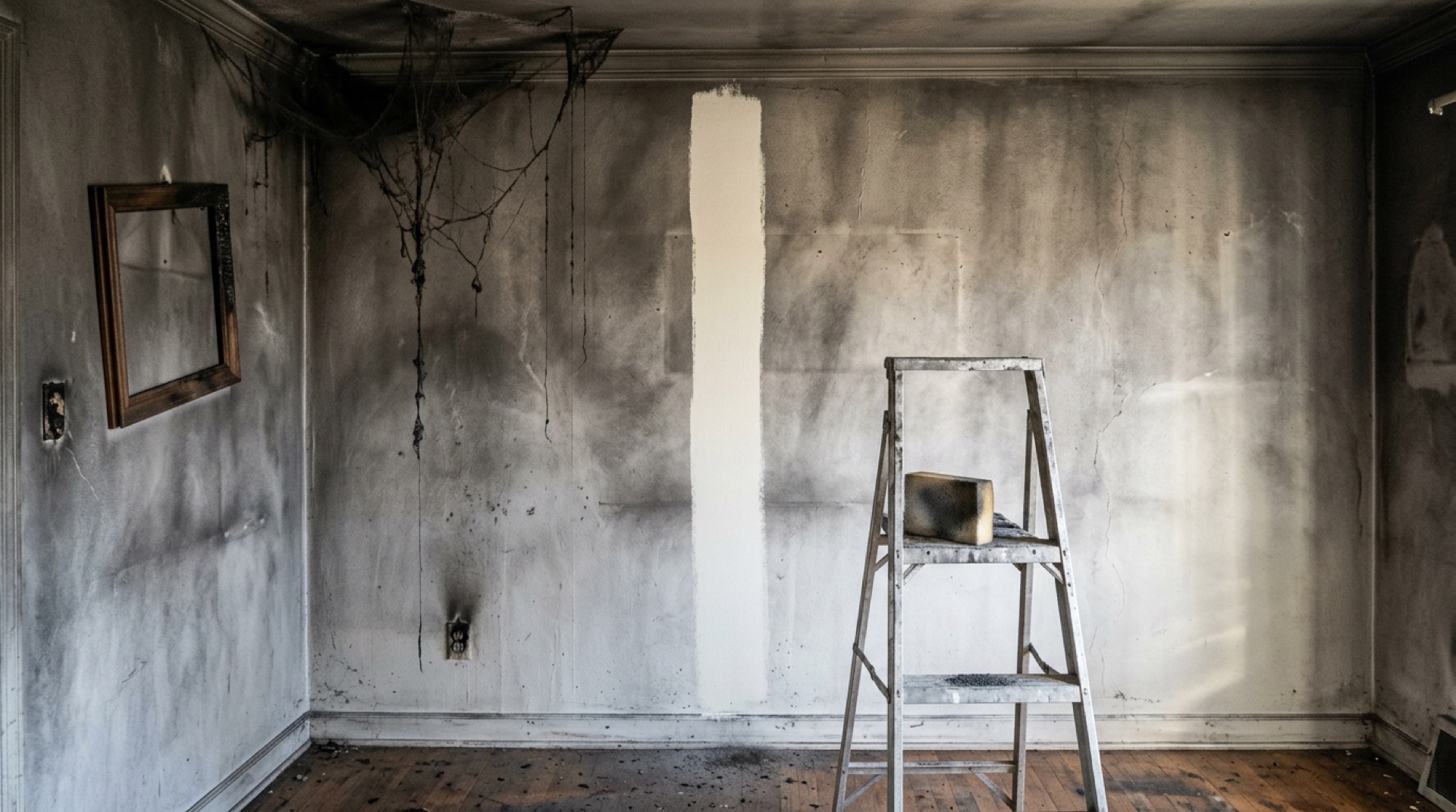
- Three kinds of soot, three methods. Dry, wet and protein residue each need a different cleaning approach.
- Do not wipe it yet. Rubbing soot with a damp cloth often smears it deeper into paint and fabric.
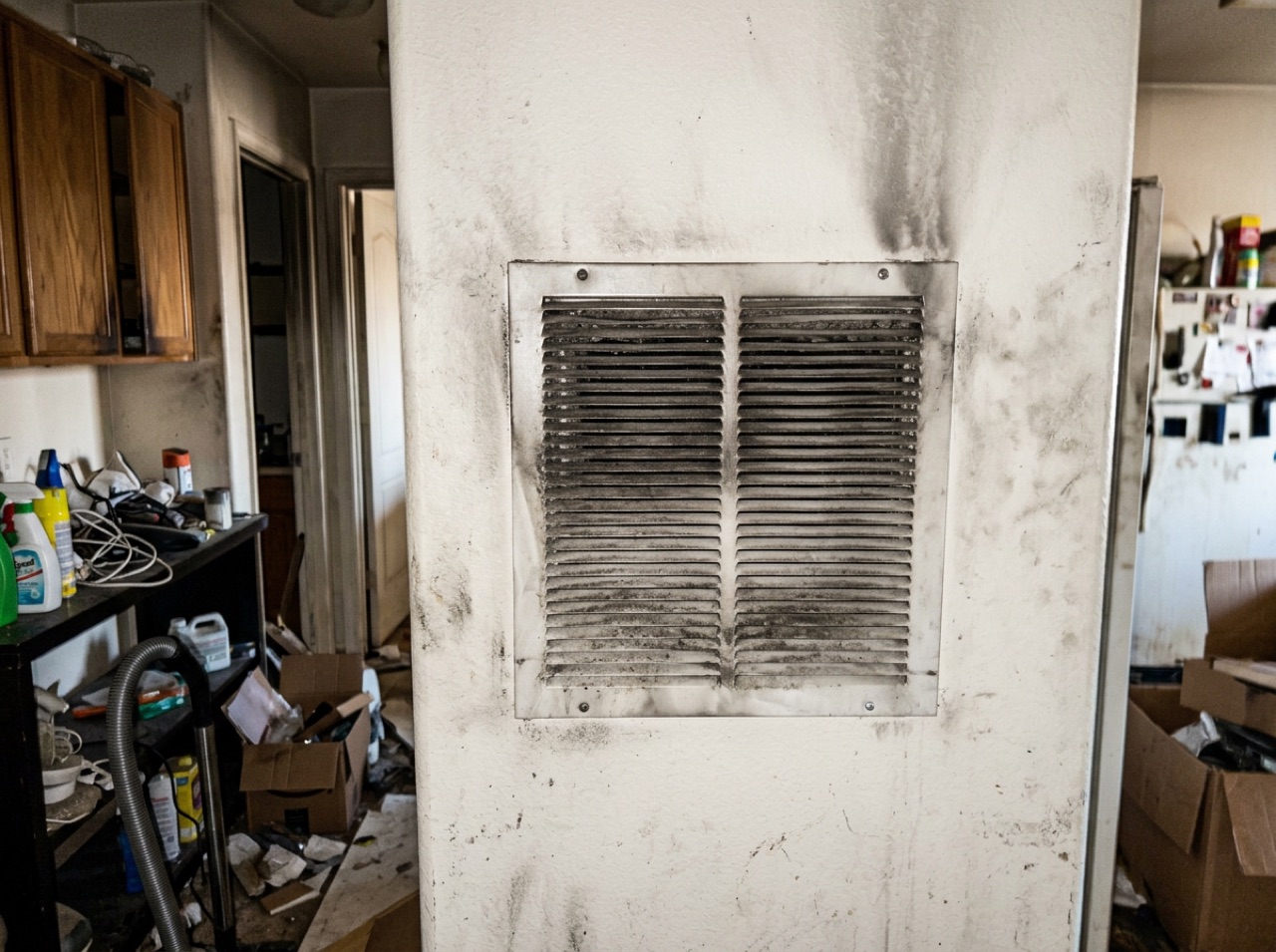
- Turn the AC off. Running the system pulls smoke through the return and spreads residue through every vent.
- Belongings too. We clean and care for furniture and personal items, not just walls.
- Free estimate, answered 24/7, for homes and commercial spaces across the Las Vegas Valley.
What are the signs of smoke damage?
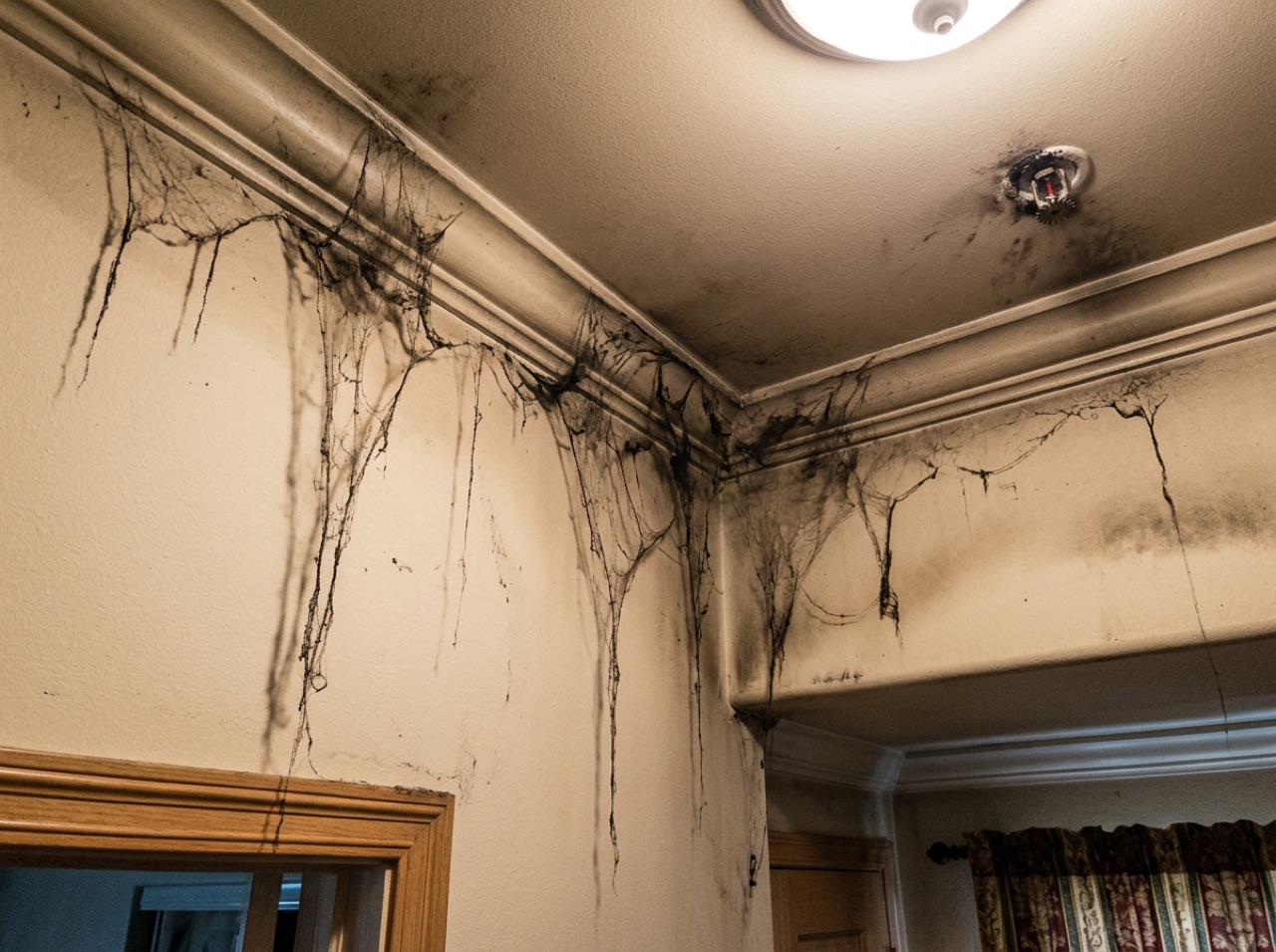
Smoke damage shows up as discoloration, residue and odor, often in rooms the fire never reached. Look high first, because hot smoke rises and collects along ceilings and the tops of walls.
Common signs include gray or black shadows around outlets and light fixtures, yellowed paint, a film on windows, dark streaks above doorways, and a smell that gets stronger when the house heats up in the afternoon.
- Dark staining on ceilings, especially in corners
- Gray dust around AC vents and returns
- Yellow or brown film on cabinets and appliances
- Sticky residue in the kitchen after a cooking fire
- Smoke odor in closets, mattresses and clothing
What are the different types of soot?
Soot changes with what burned and how hot the fire was, and the type decides how it gets cleaned. Matching the method to the residue is the difference between a clean wall and a smeared one.
- A fourth type, fuel oil soot, comes from furnace puffbacks and is rare in Las Vegas homes, most of which heat with gas or electric systems.
| Soot type | Usually comes from | What it looks like | How it is handled |
|---|---|---|---|
| Dry soot | Fast, hot fires burning paper or wood | Powdery, gray or black, easy to smudge | Dry methods first, such as HEPA vacuuming and dry chemical sponges |
| Wet soot | Slow, smoldering fires burning plastic, rubber or foam | Sticky, smeary, strong odor | Specialty cleaners and more agitation; often needs repeated passes |
| Protein soot | Kitchen fires and burned food | Nearly invisible film that yellows paint and varnish | Degreasing cleaners plus odor treatment, since the smell is often worse than the stain |
What should you do before we arrive?
Keep the air conditioner off, keep your hands off the soot, and document what you see. Those three steps prevent most of the extra damage we find on smoke jobs.
- Take photos of every room and the inside of closets and cabinets.
- Keep the AC and furnace off until the ducts are checked.
- Do not wipe walls, furniture or electronics.
- Put clean sheets over furniture you need to walk past.
- Throw out food that was exposed to smoke or heat.
Water or smoke damage right now? A crew answers 24/7.
Call 725-525-3122What happens during smoke damage cleanup?
We identify the soot, protect what is clean, then remove residue from the top down. Cleanup is one stage of full fire damage restoration, so it is planned around any drying and rebuild work.
- Test surfaces. We check walls, ceilings and contents to identify the soot type and how deep it goes.
- Contain and protect. Unaffected rooms are closed off so residue does not spread.
- Clean from the top down. Ceilings first, then walls, cabinets and floors.
- Address the ducts. Smoke pulled through the HVAC system leaves residue that will keep blowing out if it is not cleaned.
- Clean contents. Furniture, fabrics and personal belongings are cleaned or set aside for your insurance inventory.
- Treat odor. Lingering smell is handled through fire odor removal, since clean surfaces can still hold odor in porous materials.
What causes smoke damage in Las Vegas homes?
Most smoke damage here comes from kitchen fires, followed by garage, dryer and electrical fires. A short grease fire can leave protein residue in every room on the same air system.
Wildfire smoke is the other source. Smoke from large fires in California and Arizona sometimes drifts into the valley, and the EPA explains how it gets inside through open windows, HVAC systems and small gaps in its guide to wildfires and indoor air quality. Homes with evaporative coolers can pull smoke and fine ash straight in.
Closed-up homes are a third case. When a home sits empty through a Las Vegas summer, a small electrical fire or smoldering appliance can leave residue that bakes onto surfaces for weeks before anyone finds it.
Why choose JGW Group for smoke cleanup?
Smoke jobs are rarely just smoke, and JGW Group handles the whole job from mitigation through reconstruction, plus care of your furniture and belongings. We document the damage and cleaning for your insurance claim, and your insurer decides coverage.
If you are still in the first day or two, our checklist on what to do after a house fire covers the calls and photos that matter most.
Areas we serve
From our office at 6823 W Post Rd #137 in Southwest Las Vegas, JGW Group handles smoke damage cleanup in Las Vegas, Henderson, North Las Vegas, Summerlin, Spring Valley, Enterprise, Paradise and Boulder City, for homes and commercial properties.
“They showed up fast, took care of everything, and made a really stressful situation so much easier.”
Mildred Worley, Google reviewFrequently asked questions
Can smoke damage be cleaned, or does everything need replacing?
Many surfaces can be cleaned, including sealed wood, tile, glass, metal and most painted walls with light residue. Materials that soaked up heavy smoke or heat, such as insulation, some upholstery and badly stained drywall, may need to be replaced. The soot type and how long it sat both matter. We sort what can be cleaned from what should be replaced during the free estimate.
Why does my house still smell like smoke after cleaning?
Smoke odor hides in porous materials like drywall, insulation, carpet pad and the inside of air ducts. Surfaces can look clean while those materials keep releasing odor, especially in Las Vegas summer heat. Lasting results usually take cleaning plus deodorizing at the source, and sometimes sealing or replacing the affected materials.
Is it safe to run my air conditioner after a fire?
Not until the system is checked. Running the AC pulls smoke and soot into the return and pushes it out through every vent, which spreads residue into rooms that were clean. Filters, the air handler and the ducts may all need cleaning. In a Las Vegas summer that is hard advice to follow, so ask us about getting the system cleared quickly.
What is protein soot and why is it so hard to see?
Protein soot comes from burned food, usually a pot or pan left on the stove. It forms a thin, nearly clear film rather than black dust, so many people do not realize it is there. It can yellow paint and cabinets and carries a strong, sour odor. It needs degreasing cleaners and odor treatment rather than a simple wipe-down.
Can wildfire smoke damage a house in Las Vegas?
It can. When smoke from large regional wildfires settles over the valley, fine particles and odor can get into homes through open windows, evaporative coolers, HVAC intakes and gaps around doors. Usually this means a film on surfaces, dirty filters and a lingering smell rather than heavy soot. Changing filters and keeping windows closed during smoke events helps.
Keep the air conditioner and furnace off after a fire until the system is checked, so smoke residue is not pushed through the house.