
- Mold needs water, not humidity. In Las Vegas, most mold starts with a leak, not damp air.
- Fast drying matters. The EPA says wet materials should be dried within 24 to 48 hours to prevent mold growth.
- Fix the source first. Removing mold without stopping the moisture means it comes back.
- Industry standard. Professional remediation in the U.S. generally follows the IICRC S520 standard for mold remediation.
- Free estimate, answered 24/7, for homes and commercial properties.
What are the signs of mold in a Las Vegas home?
The most common signs are a musty smell, visible spots or fuzz, and stains that keep coming back. Because the outdoor air is so dry, mold here usually points to a hidden water problem nearby.
- Musty or earthy odor in a closet, cabinet or bathroom
- Black, green, gray or white spots on drywall, baseboards or ceilings
- Water stains or bubbling paint on ceilings below a bathroom or AC unit
- Warped baseboards or flooring, often from a slab leak
- Mold on the back of cabinets under sinks or around the water heater
- Allergy-like symptoms that ease when you leave the house
What causes mold in a desert city?
Mold grows in Las Vegas wherever a leak keeps materials wet for more than a day or two. Low outdoor humidity does not help when the water is coming from inside the walls.
| Common source | Where mold shows up | Why it gets missed |
|---|---|---|
| AC condensate line clogs or drain pan overflows | Ceilings below attic air handlers, hall closets | Units run nonstop in summer and leaks stay hidden in the attic |
| Slab leaks | Baseboards, carpet pad, bottom of drywall | Most homes sit on concrete slabs, so water spreads under flooring |
| Water heater and supply line leaks | Garage walls, laundry rooms, closets | Hard water scale wears down tanks and fittings |
| Monsoon roof leaks | Ceilings, attic insulation, exterior walls | Leaks only show up during heavy summer storms |
| Evaporative coolers | Roof decking, ceilings near vents | Coolers add water and humidity by design |
| Closed-up homes in summer | Anywhere near plumbing | A slow leak can run for weeks with no one home |
What should you do before we arrive?
Stop the water if you can, and leave the mold alone. Disturbing it can release spores into the air.
- Shut off the water at the fixture or main if there is an active leak.
- Do not scrub, sand or dry-brush moldy surfaces.
- Turn off the AC if mold is near the air handler, returns or vents, so spores are not spread through the ducts.
- Keep children, older adults and anyone with asthma away from the area.
- Take photos for your records and insurance claim.
Water or smoke damage right now? A crew answers 24/7.
Call 725-525-3122What happens during mold remediation?
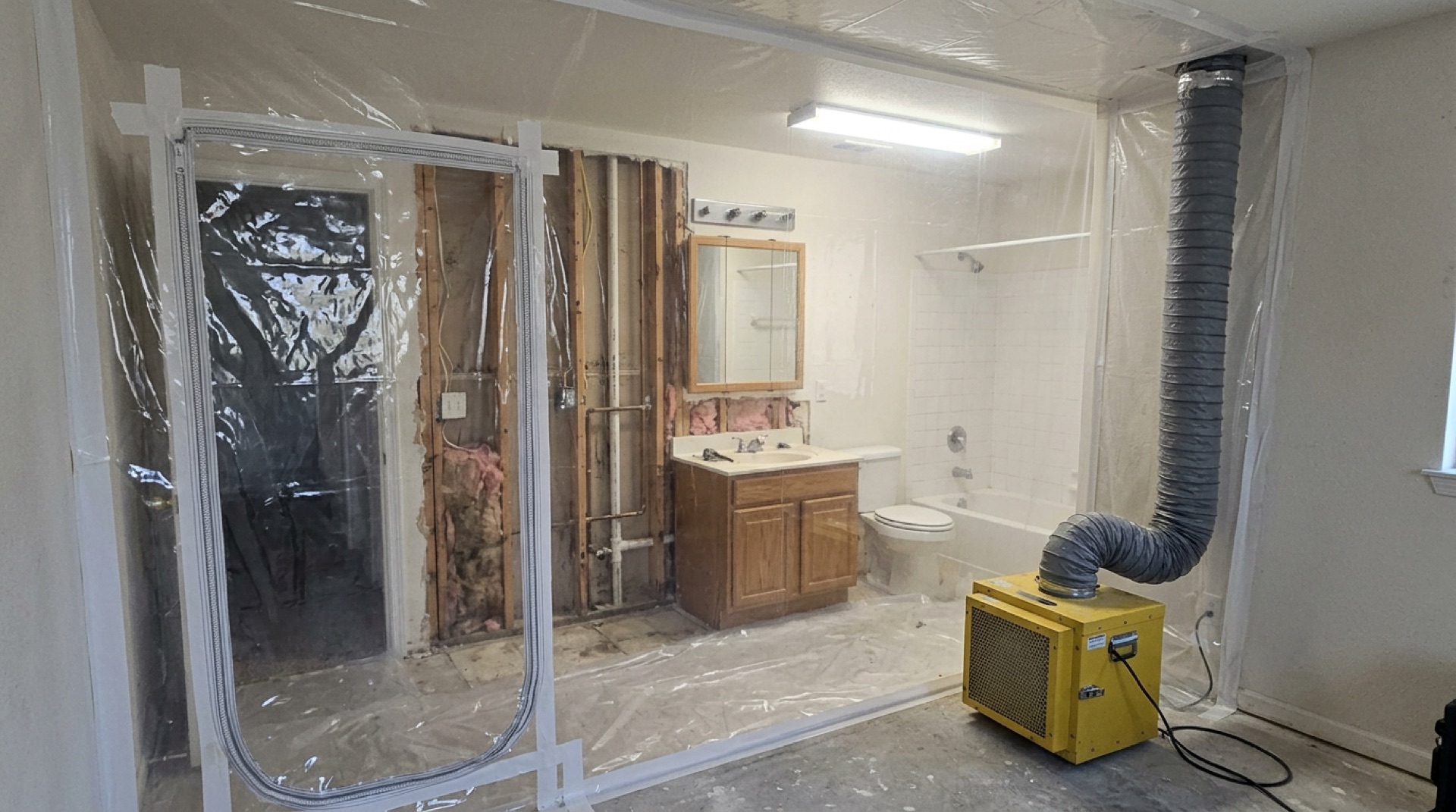
Remediation means finding the moisture, containing the area, removing mold and drying the structure. The goal is to remove the growth and stop the conditions that caused it, not just clean the stain you can see.
- Inspect and measure. We look for the water source and take moisture readings to map how far it spread.
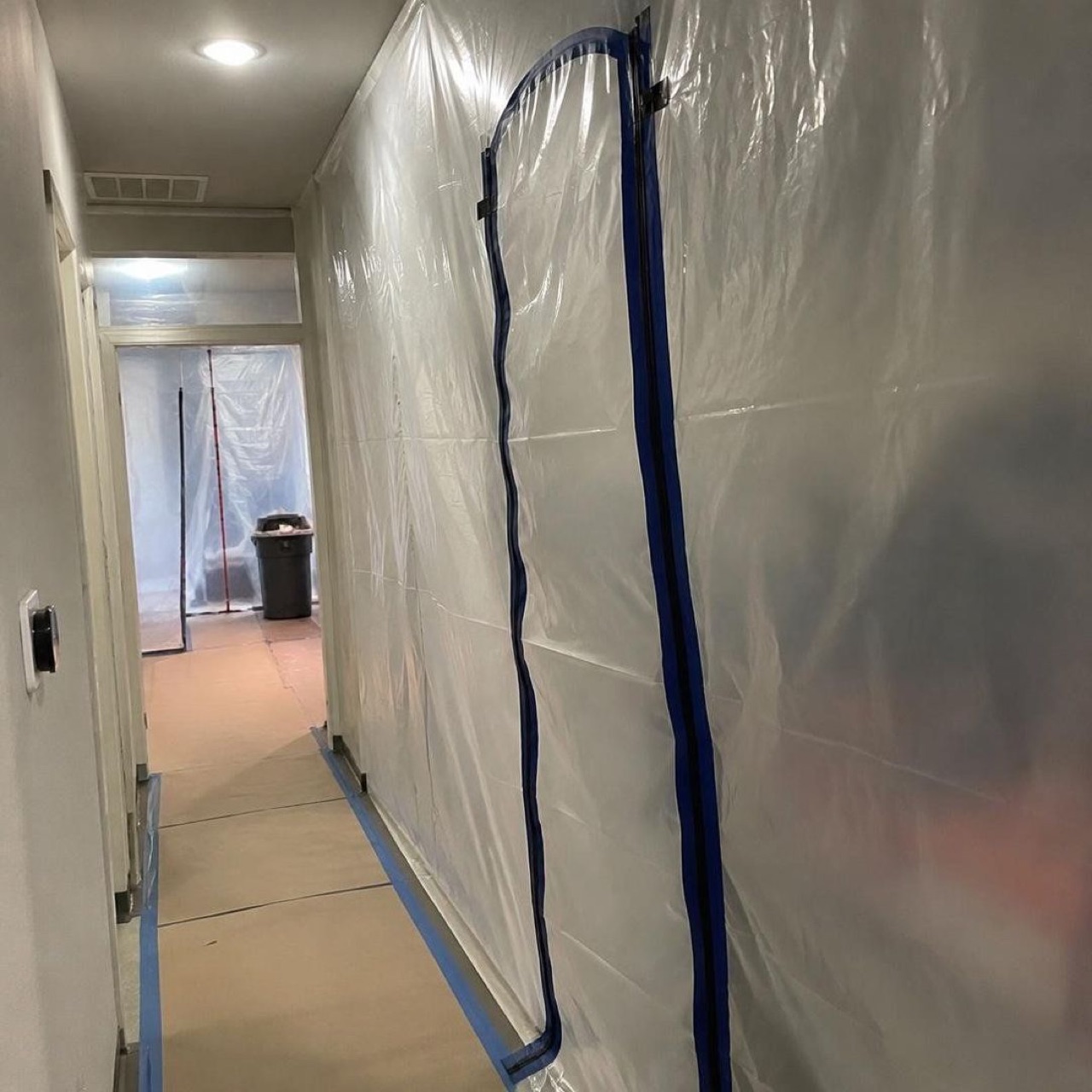
- Contain. The work area is sealed off so spores do not travel to clean rooms.
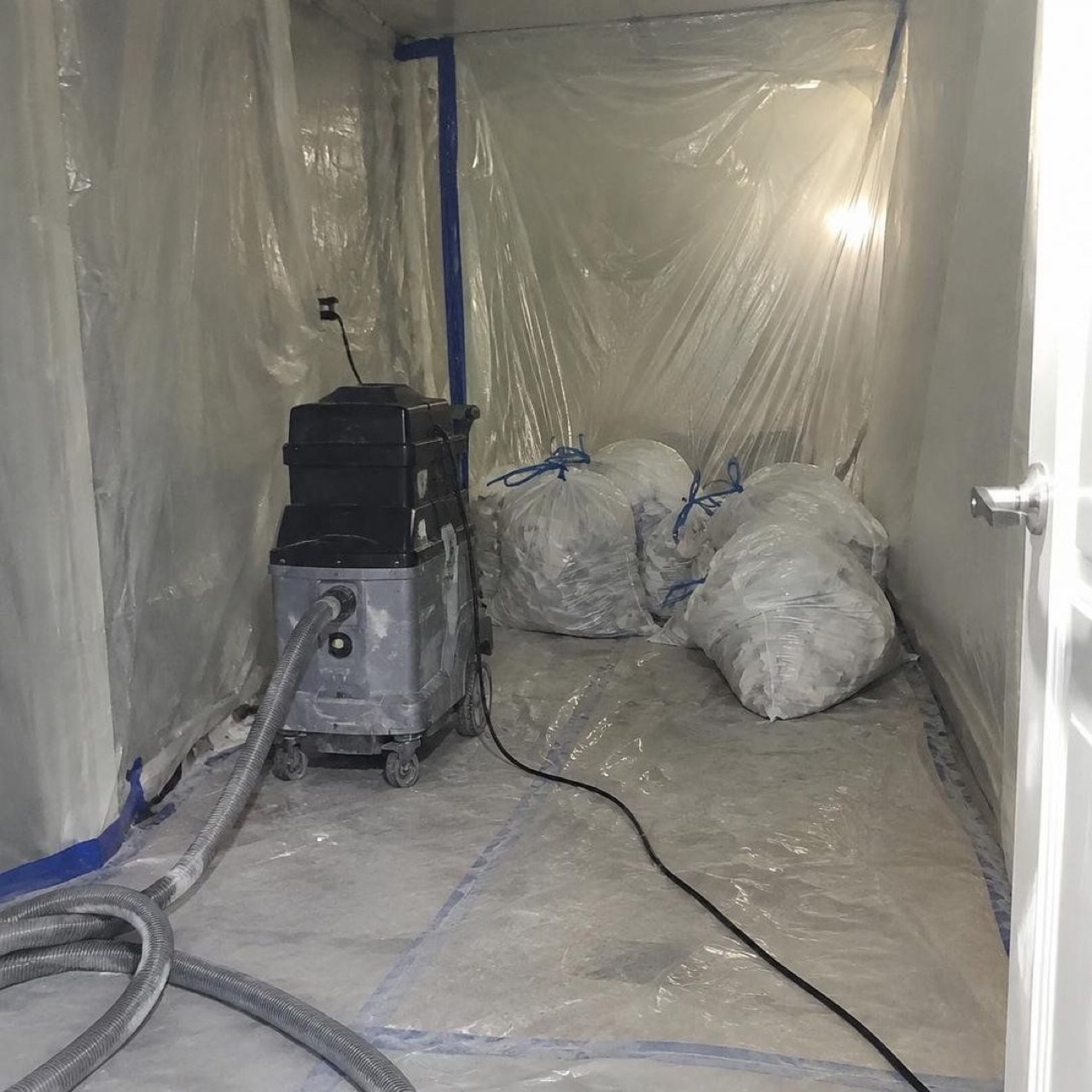
- Remove. Moldy drywall, insulation, carpet pad and other porous materials that cannot be cleaned are bagged and removed.
- Clean. Framing and non-porous surfaces are cleaned and HEPA vacuumed.
- Dry. Air movers and dehumidifiers dry the structure while we monitor moisture levels.
- Rebuild. Removed drywall, flooring and trim are replaced so the space is back to normal.
Can you remove mold yourself?
Sometimes. The EPA's guide to mold, moisture and your home says a homeowner can usually handle mold covering less than about 10 square feet, as long as the moisture problem is fixed and protective gear is worn. Larger areas, mold inside walls or ducts, and mold from sewage or contaminated water call for a professional.
Speed is the best prevention. Our article on how fast mold grows after water damage explains the timeline, and if your water came from under the floor, read the signs of a slab leak in Las Vegas. If you see dark growth and want to know what it means, see our page on black mold removal.
Why choose JGW Group for mold remediation?
JGW Group handles the leak, the mold and the rebuild as one job, so you are not juggling a plumber, a mold company and a contractor. We use moisture readings, extraction equipment, air movers and dehumidifiers, and we monitor moisture until the area is dry.
We document the damage and the work for your insurance claim and explain each step. Your insurer decides what is covered, and coverage often depends on whether the mold came from a sudden leak or a long-term problem.
Areas we serve
From our office at 6823 W Post Rd #137 in Southwest Las Vegas, JGW Group provides mold remediation in Las Vegas, Henderson, North Las Vegas, Summerlin, Spring Valley, Enterprise, Paradise and Boulder City, for homes and commercial properties.
“Both their mold remediation and restoration were top-notch.”
Jonathan Nicholson, Google reviewFrequently asked questions
How fast can mold grow after a leak in Las Vegas?
The EPA says mold can begin to grow on wet materials within 24 to 48 hours, which is why it recommends drying them in that window. Dry outdoor air in Las Vegas does not change that inside a wet wall or under carpet pad. A hidden leak from an AC line, water heater or slab pipe can keep materials wet long enough for mold to grow.
Does homeowners insurance cover mold in Nevada?
It depends on your policy and the cause. Many policies treat mold from a sudden, covered event, like a burst supply line, differently from mold caused by a slow leak or long-term moisture, and some policies limit mold coverage. Your insurer decides. JGW Group documents the damage, moisture readings and drying to support your claim.
Should I get a mold test before remediation?
If you can see the mold, testing is usually not needed to start; the CDC says visible mold should be removed regardless of type. Testing can help when you smell mold but cannot find it, when you need clearance results after remediation, or for a real estate sale. An independent inspector can take samples and send them to a lab.
Can mold spread through my AC ducts?
It can. If mold grows in or near the air handler, drain pan or return, the system can carry spores through the house every time it runs, and Las Vegas air conditioners run almost constantly in summer. If you suspect mold near the HVAC system, turn it off and have the unit, drain line and ducts checked during remediation.
How long does mold remediation take?
Small, contained jobs may take a few days, including drying. Larger jobs that involve opening walls, replacing insulation or fixing a slab leak take longer, especially if rebuild work follows. The timeline depends on how far the moisture spread and how quickly materials dry. We give you a clear plan with the free estimate.
Will bleach kill mold?
Bleach can clean mold off hard, non-porous surfaces like tile and glass, but it does not fix the problem in porous materials like drywall or wood, where growth extends below the surface. Never mix bleach with ammonia or other cleaners. Most important, cleaning does not last if the moisture source is still there.
Do not scrub or sand moldy surfaces, and keep people with asthma or weakened immune systems away from the area.