
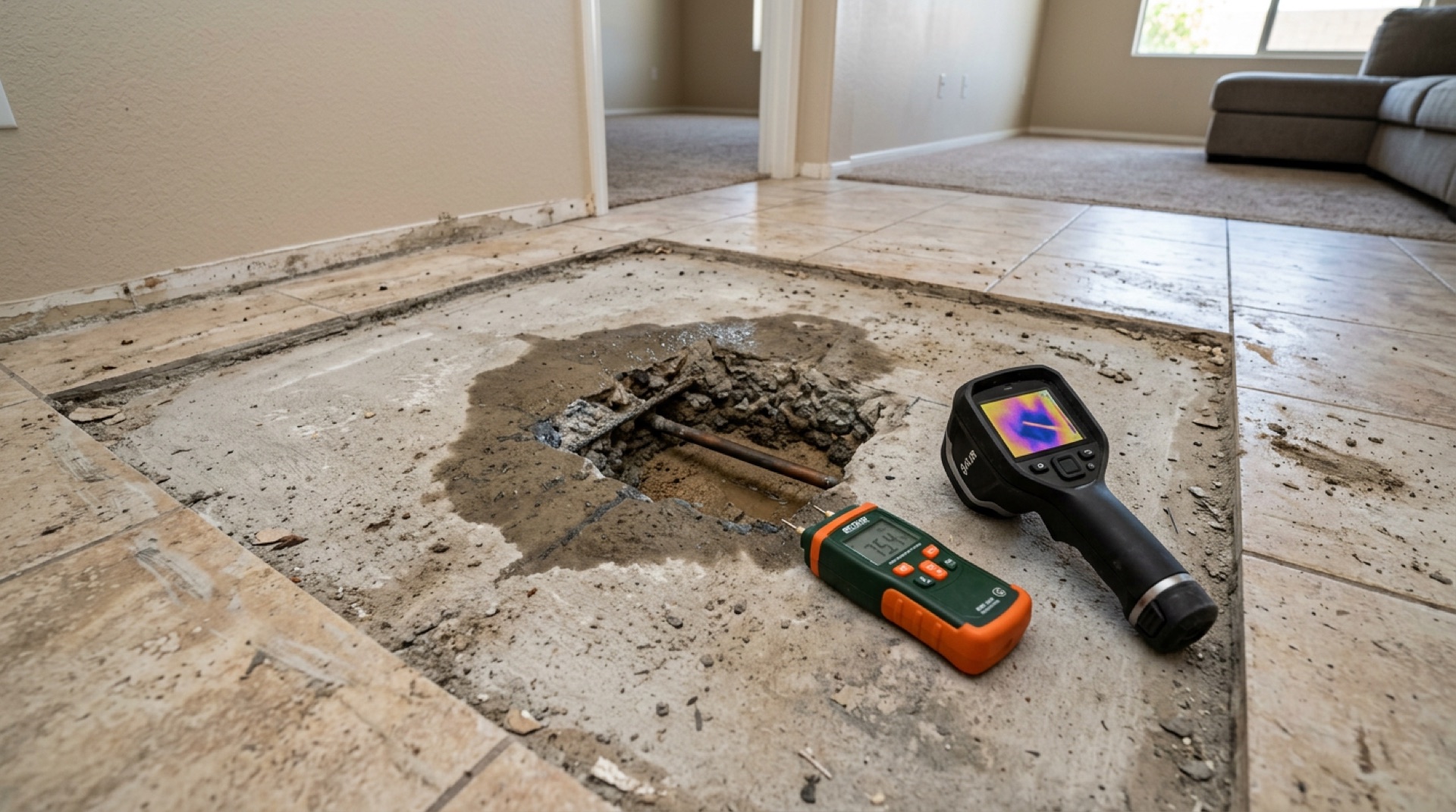
- Common in the valley. Most Las Vegas homes are built slab-on-grade, with water lines running under or through the concrete.
- Two jobs. A plumber locates and fixes the leak. JGW Group dries and repairs the floors, walls and cabinets it soaked.
- Concrete holds water. A slab can stay wet well after the leak is fixed, so drying is measured with readings.
- Mitigation to rebuild. JGW Group handles water removal, drying, care of belongings and reconstruction.
- Claim guidance. Damage and drying are documented. Your insurer decides coverage.
What are the signs of a slab leak?
The most common signs are a water bill that jumps without a change in use, a warm or damp spot on the floor, and the sound of running water when nothing is on. Damage often appears at the edges first, where water wicks into baseboards and drywall.
Our article on slab leak signs in Las Vegas goes deeper on early warnings. If several of these show up together, call a plumber for leak detection and stop using water on that line if you can.
- A higher water bill with no change in household use
- A warm spot on tile or wood, usually from a hot water line
- Damp or cupping flooring, or carpet wet with no visible source
- Swelling baseboards or cabinet bases
- A musty smell near floors
- The water meter moving with every fixture off
- New cracks in tile or flooring near a wet area
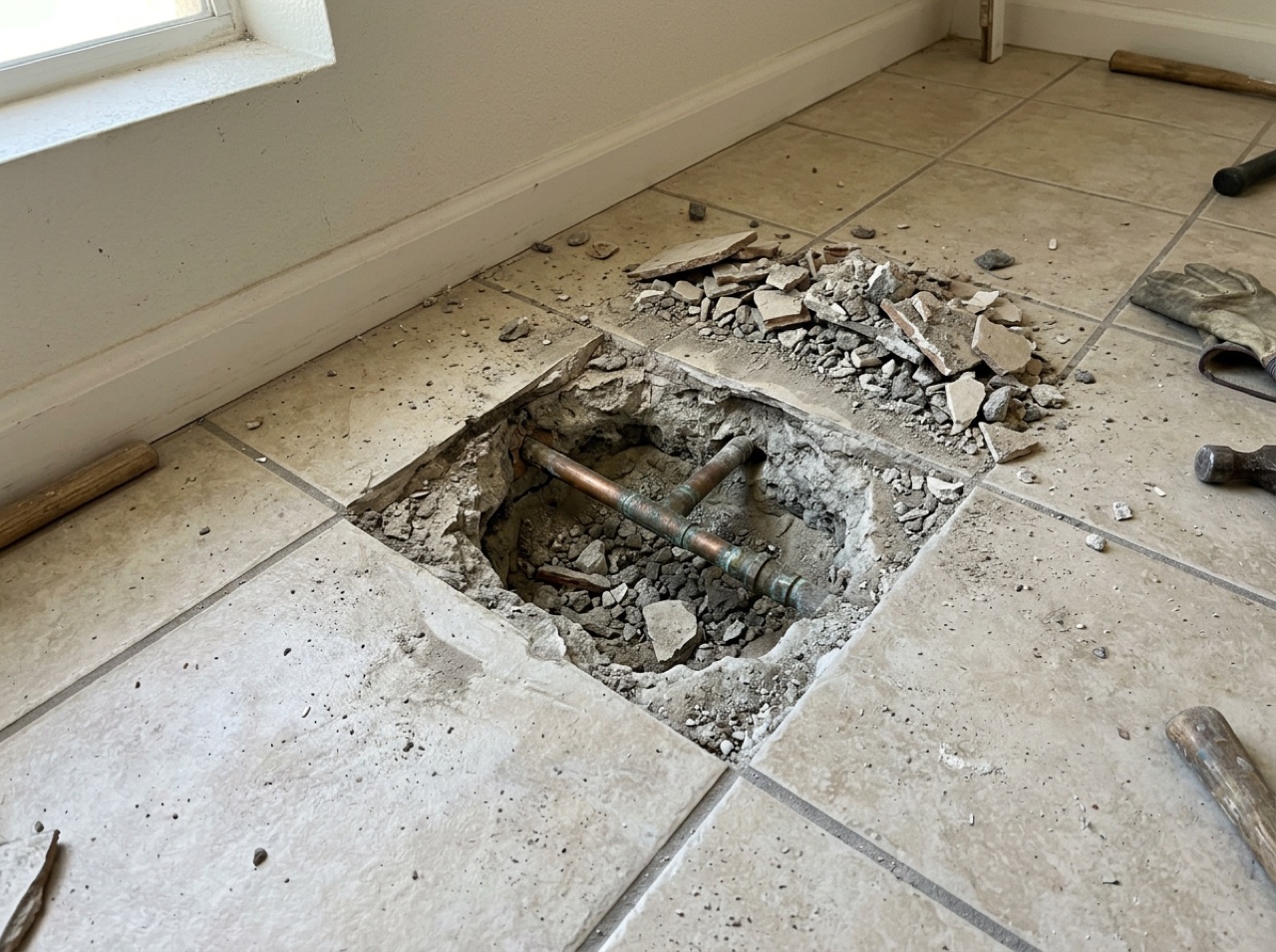
What should you do when you suspect a slab leak?
Confirm the leak, limit water use and document what you see. Shutting off the water stops the damage from growing while a plumber locates the leak.
Turn off every fixture and check the meter. If it moves, close the main valve when you are not using water. If the warm spot points to a hot water line, turning off the water heater's supply can slow the leak. Photograph flooring, baseboards and your water bills. If the Las Vegas Valley Water District is your provider, its customer assistance programs describe leak adjustment and repair reimbursement options for qualifying customers.
- Check the water meter with everything off
- Close the main valve between uses if the meter moves
- Call a licensed plumber for leak detection and repair
- Photograph damage and save recent water bills
- Move furniture and rugs off damp flooring
- Call JGW Group to assess the water damage
How does JGW Group handle slab leak water damage?
The team maps where water traveled, removes what cannot be dried and dries the slab and walls until the readings come down. Floors and finishes go back after that.
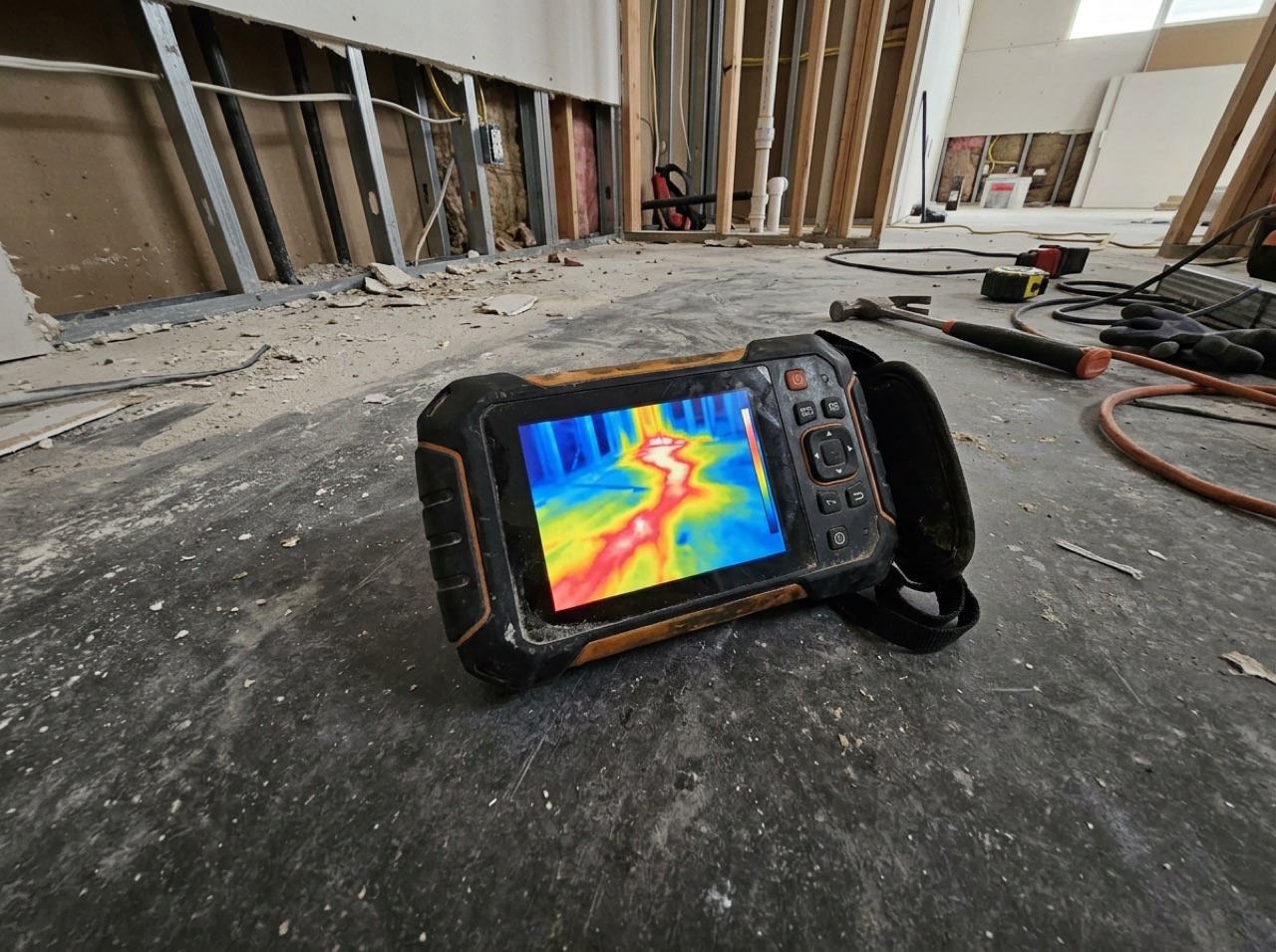
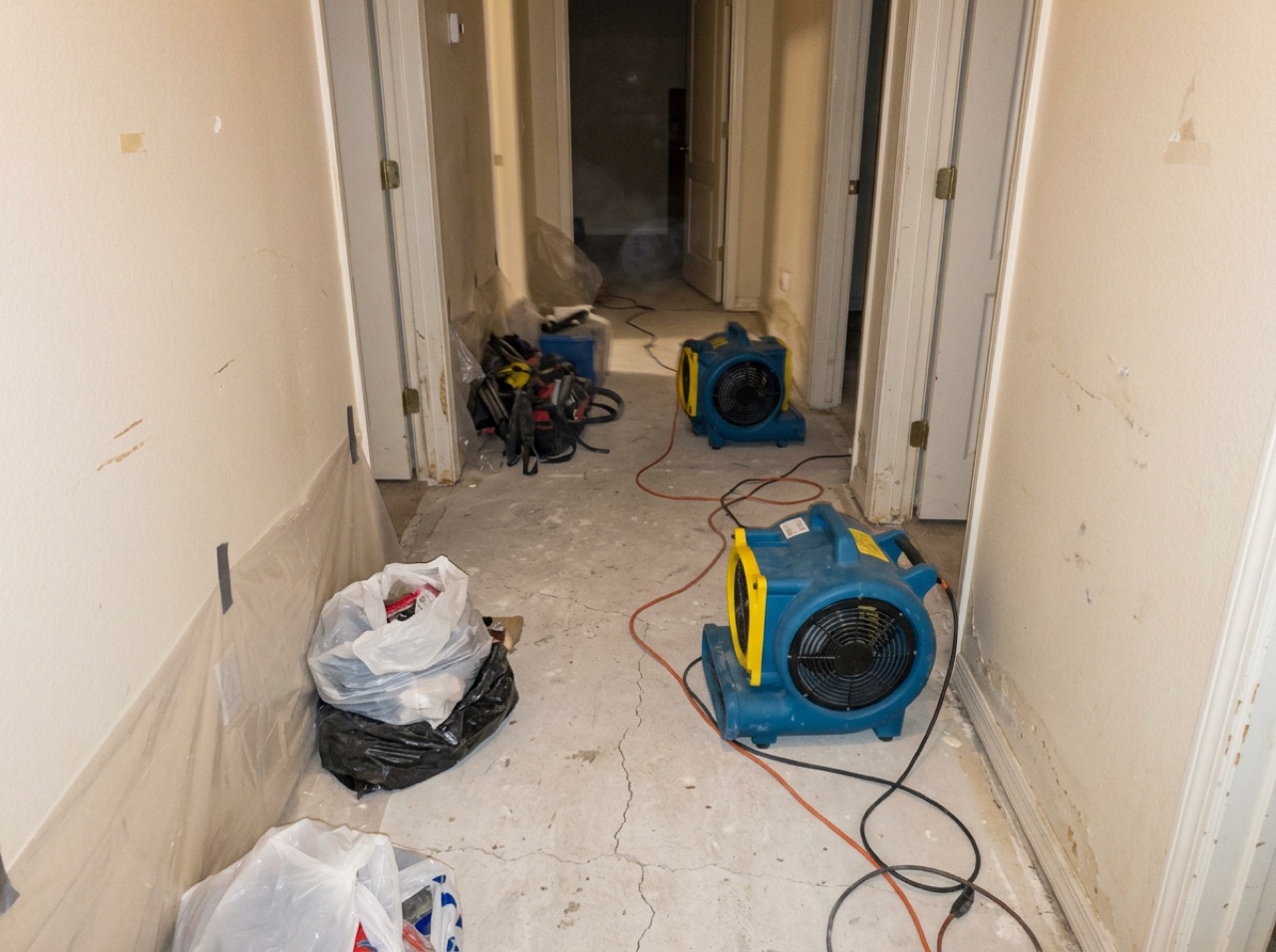
Moisture readings are taken across the floor and along walls to find the full wet area, which is often larger than the visible damage. Carpet pad, laminate or wood flooring over the wet zone may need to come up so the concrete can dry. Air movers and dehumidifiers run while readings are tracked. Our structural drying page explains why concrete takes longer than other materials.
| Flooring type | What usually happens over a wet slab | Why |
|---|---|---|
| Carpet and pad | Pad often removed, carpet sometimes saved | Pad holds water against the slab |
| Laminate or vinyl plank | Often removed in the wet area | It traps moisture and swells at seams |
| Engineered or solid wood | Often removed if cupped | Wood absorbs water and warps |
| Tile | Can sometimes stay, depending on readings | Tile itself tolerates water, but grout and setting bed may hold it |
Water or smoke damage right now? A crew answers 24/7.
Call 725-525-3122Why are slab leaks common in Las Vegas?
The valley is full of slab-on-grade homes, so water lines often run under or through concrete. When one of those lines fails, there is no crawlspace to catch it.
Plumbers commonly point to a few local factors. The valley's hard water leaves mineral deposits inside pipes. Pipes that rub against concrete or gravel can wear through. Soil movement can stress lines under the slab, and high water pressure adds strain. Many homes in established neighborhoods also have pipes that are reaching the end of their service life.
- Water lines running under concrete with no crawlspace
- Mineral scale from hard water
- Pipe wear where lines touch concrete or gravel
- Soil movement under the foundation
- Aging pipes in older neighborhoods
Why choose JGW Group after a slab leak?
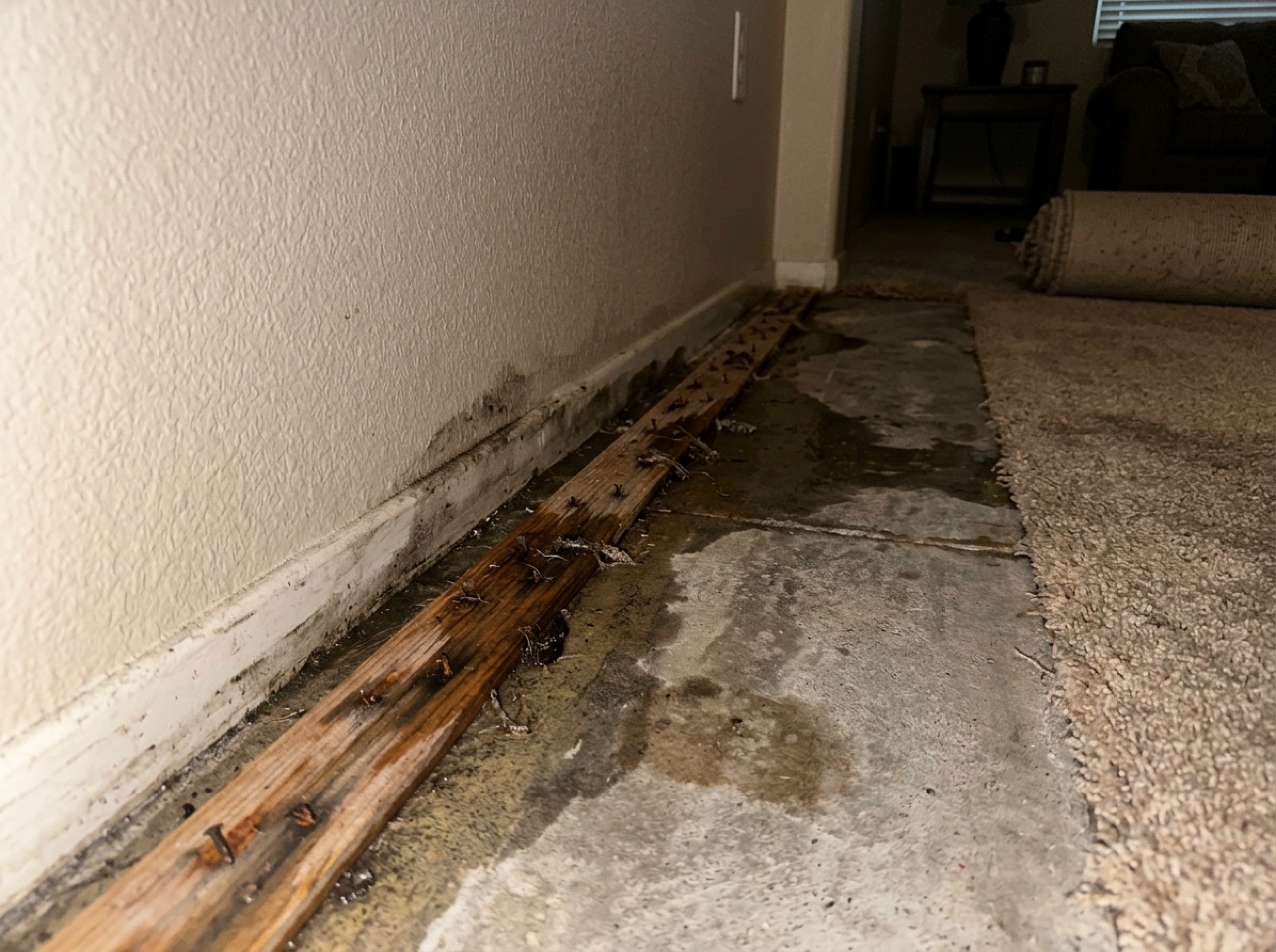
Slab leaks often end with torn-out flooring, cut baseboards and wet cabinets in more than one room. JGW Group handles water damage restoration from mitigation through full reconstruction, so one team carries the job from drying to finished floors.
Drying is monitored with moisture readings, and damage is documented for your claim. The team guides you through the insurance process. Your insurer decides what is covered. Furniture and belongings moved during the work are cared for and cleaned as needed.
Where does JGW Group repair slab leak damage?
JGW Group is based at 6823 W Post Rd #137 in southwest Las Vegas and serves homes and businesses across the valley.
Service areas include Las Vegas, Henderson, North Las Vegas, Summerlin, Spring Valley, Enterprise, Paradise and Boulder City. Calls are answered 24/7.
“They handled everything from the water mitigation to the full reconstruction. They also took great care of our furniture and personal belongings. The team guided us through the insurance claim process.”
Carol Denson, Google reviewFrequently asked questions
Does JGW Group find and fix slab leaks?
A licensed plumber locates the leak and repairs or reroutes the line. JGW Group handles the water damage: moisture readings, removal of wet flooring where needed, drying the slab and walls, and rebuilding floors, baseboards and cabinets. It helps to call both early, so drying can start soon after the leak is repaired instead of waiting on a second visit.
How long does a concrete slab take to dry?
Concrete dries slower than drywall or carpet because it is dense and holds water deep inside. Timing depends on how long the leak ran, how much of the slab got wet and what flooring was on top. Drying continues until readings show the slab is ready for new flooring. JGW Group tracks those readings and tells you when rebuilding can start.
Will my tile floor have to come up after a slab leak?
Not always. Tile tolerates water, but grout lines and the setting bed can trap moisture against the slab. If readings show the area under the tile is drying, it may stay. Cracked, loose or hollow-sounding tile, or a plumber needing access to the pipe, usually means some tile comes up. JGW Group explains the options after taking readings.
Does homeowners insurance cover slab leak damage in Nevada?
Policies vary. Some cover the water damage from a sudden slab leak and the cost to access the pipe, while the pipe repair itself or long-term leaks may be treated differently. Read your policy and ask your insurer. JGW Group documents the damage and drying with photos and moisture readings and guides you through the claim process.
Can a slab leak cause mold?
Yes. Water trapped under carpet pad, flooring and baseboards stays out of sight and out of the air, so it can sit long enough for mold to grow. The EPA notes that wet materials should be dried within 24 to 48 hours to prevent mold. Because slab leaks are often found late, a moisture check after the repair is worth doing.
If you see water coming up through the floor or hear rushing water under the slab, close the main valve right away.