
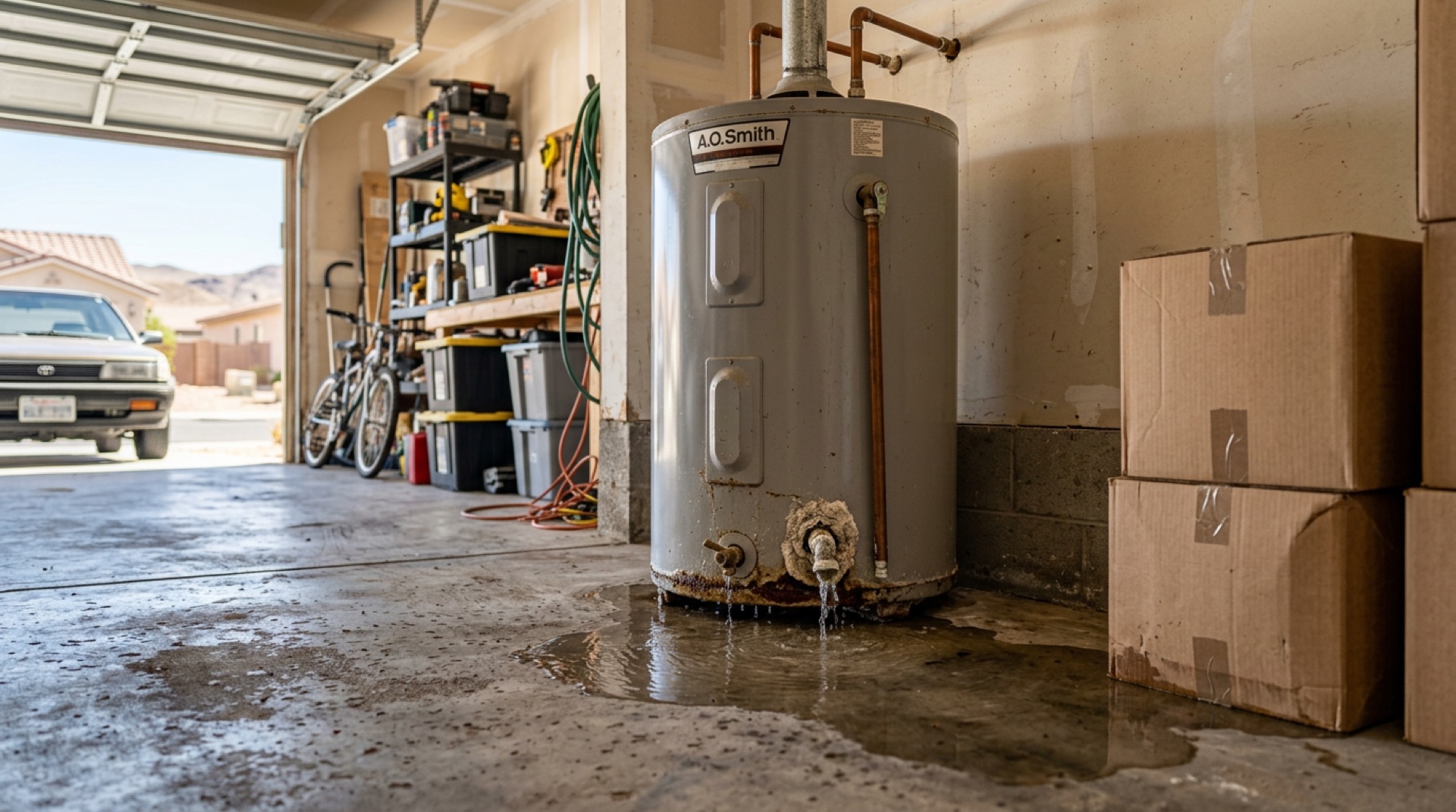
- Five common sources. Water heaters, washers, dishwashers, fridge ice maker lines and AC condensate lines cause most appliance water damage.
- Hard water factor. The Las Vegas Valley Water District classifies its water as very hard, and scale wears on tanks, valves and fittings.
- Hidden spread. Water runs under cabinets, appliances and flooring, so readings matter more than what you can see.
- One team. JGW Group handles extraction, drying, belongings and reconstruction. An appliance tech or plumber repairs the unit.
- Claim guidance. Damage and drying are documented. Your insurer decides coverage.
Which appliance leaks cause the most water damage?
Water heaters and washing machines release the most water at once, while dishwashers, fridge lines and AC condensate lines tend to leak slowly where no one looks. Slow leaks can do as much harm because they go unnoticed.
The water category matters. A fridge or water heater supply line is usually clean water. Washer and dishwasher discharge carries soap and food soil, which the IICRC S500 standard treats as Category 2, and that changes how carpet and pad are handled.
| Appliance | Common failure | Where the damage shows up |
|---|---|---|
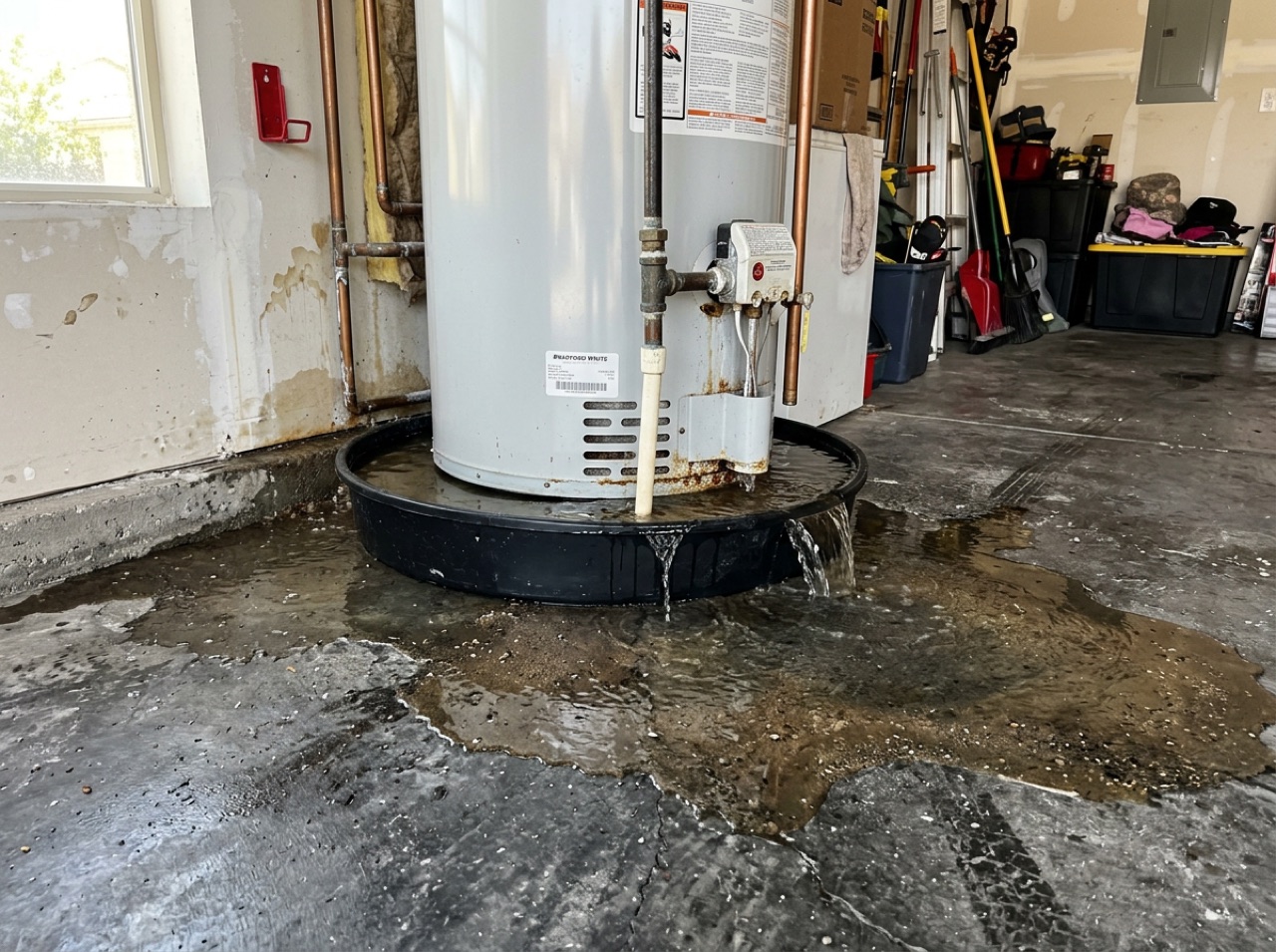
| Water heater | Tank rusts through, relief valve or fitting leaks | Garage floor, closet walls, nearby drywall and flooring |
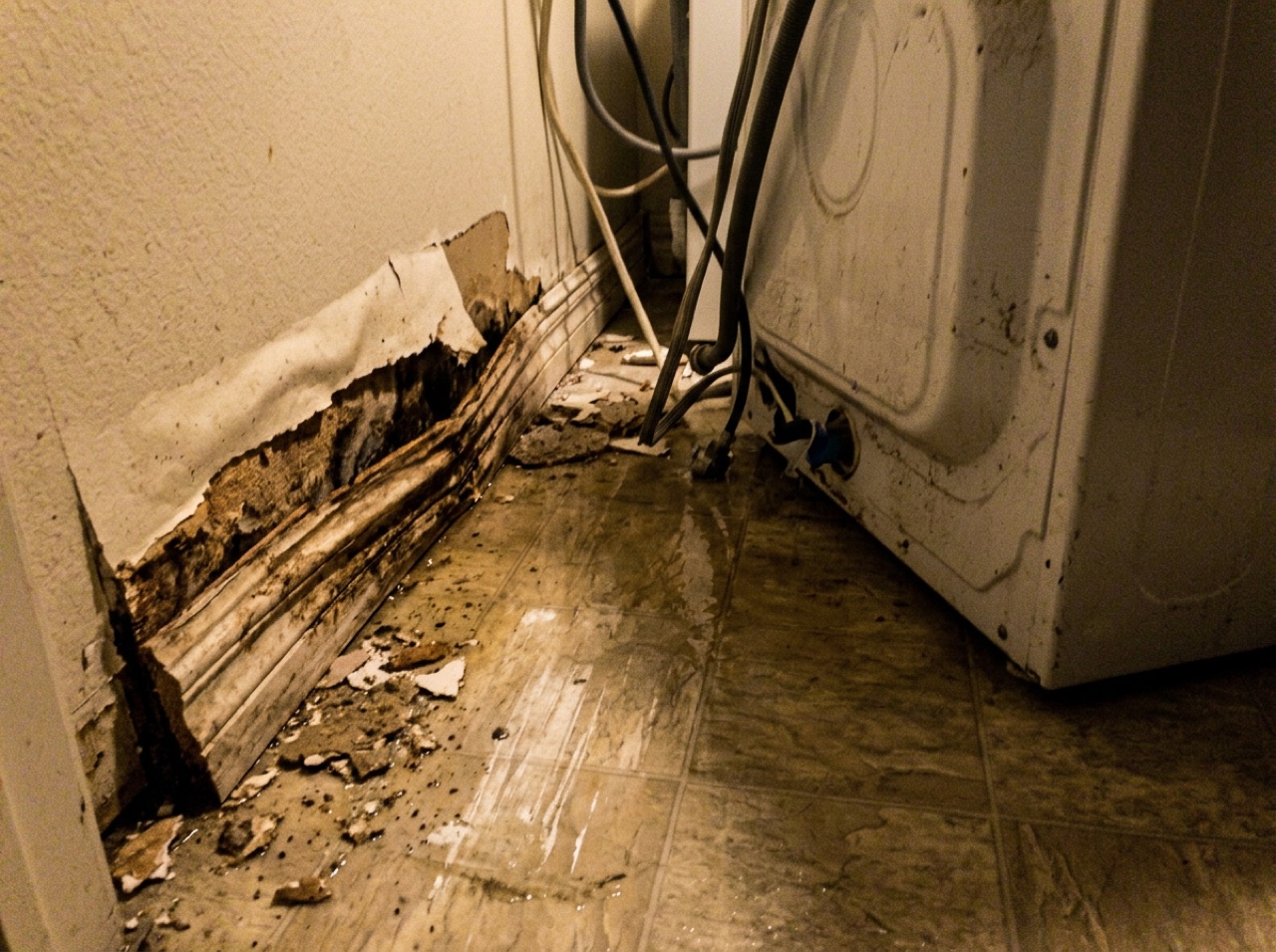
| Washing machine | Supply hose bursts, drain hose slips, overflow | Laundry floor, hallway, rooms next to the laundry |
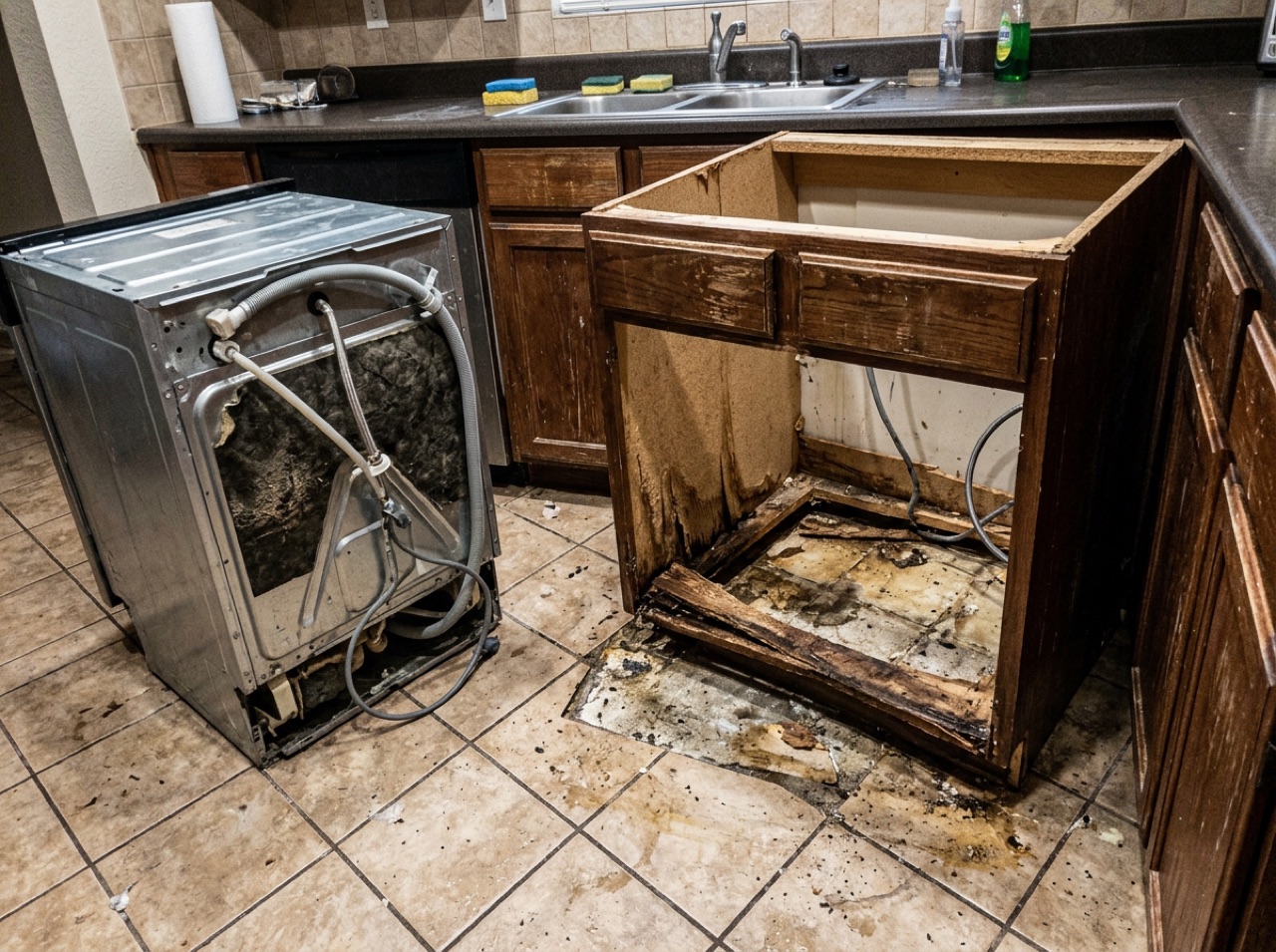
| Dishwasher | Supply line, door seal or drain leak | Under cabinets, kitchen subfloor, flooring |
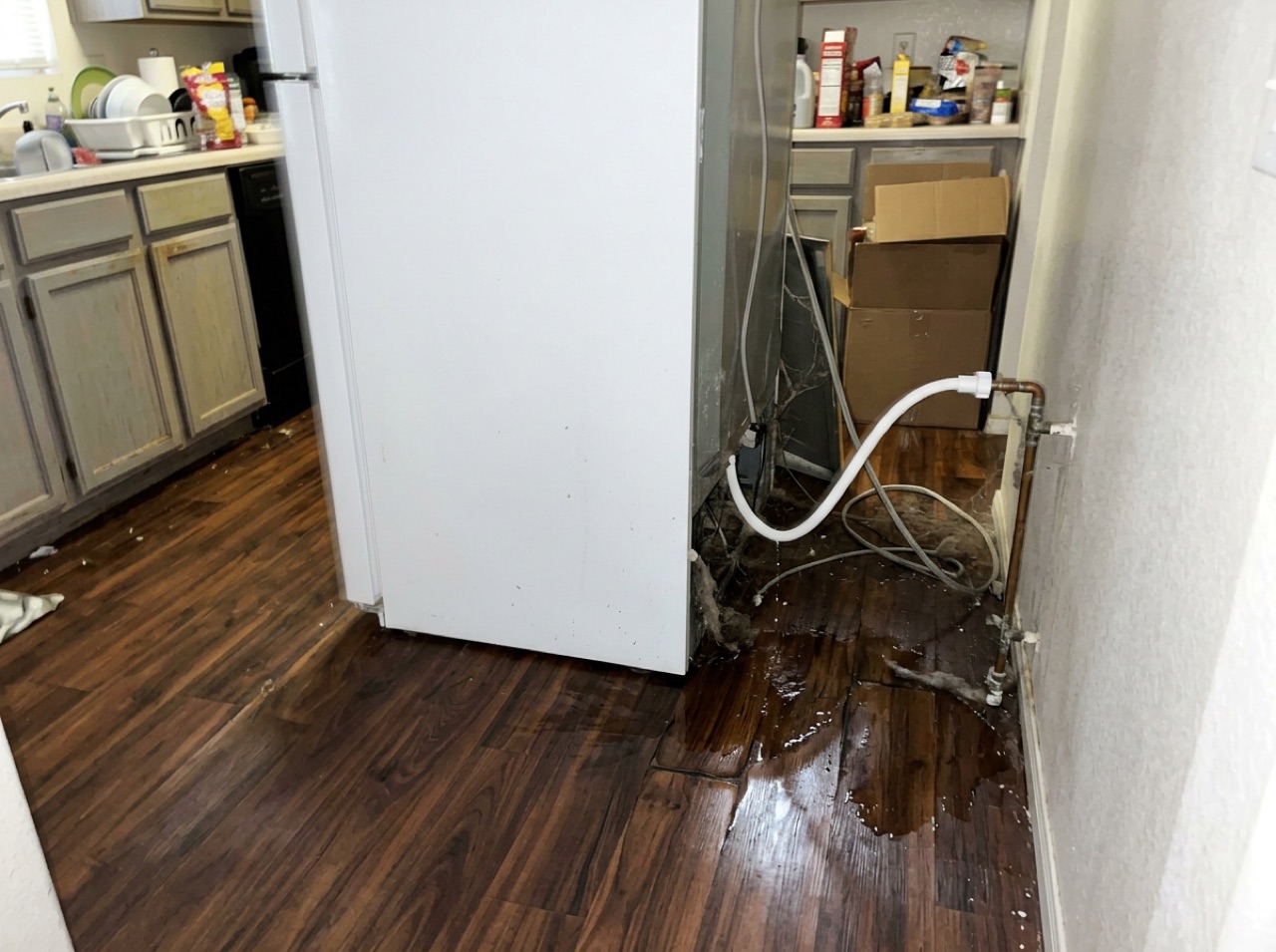
| Refrigerator | Ice maker or water line cracks | Under the fridge, kitchen flooring, baseboards |
| AC condensate line | Line clogs and pan overflows | Ceilings below attic air handlers, closets, walls |
What should you do when an appliance starts leaking?
Turn off the water to the appliance, cut its power if it is safe and photograph everything. Most appliances have a shutoff valve behind or below them.
For a water heater, close the cold water valve on top of the tank and turn the unit off: gas to pilot or off, or the breaker for electric. For a washer, close both hose valves. For a dishwasher or fridge, look under the sink or behind the unit. If you cannot find a valve, close the main. For AC condensate overflow, turn the system off at the thermostat.
- Close the appliance supply valve, or the main if needed
- Turn off power or gas to the appliance only if you can do it from a dry spot
- Pull the appliance out only if the floor is dry and it is safe to move
- Photograph the appliance, the leak point and all wet areas
- Leave wet cabinets and flooring in place until they are checked
- Call the appliance tech or plumber for the unit and JGW Group for the damage
What happens during appliance leak cleanup?
The team removes standing water, measures how far it traveled and dries what can be saved. Cabinets and flooring that cannot be dried are removed and later rebuilt.
Standing water is pulled out with emergency water extraction equipment. Moisture readings are taken under and around cabinets, along walls and across flooring. Toe kicks or lower panels may come off so air can reach the space under cabinets. Air movers and dehumidifiers run while readings are tracked, and repairs follow once the area is dry.
- Extraction of standing water
- Moisture readings under cabinets and flooring
- Removal of toe kicks, pad or flooring where needed
- Drying with air movers and dehumidifiers
- Cleaning surfaces touched by washer or dishwasher water
- Rebuild of cabinets, flooring and drywall
Water or smoke damage right now? A crew answers 24/7.
Call 725-525-3122Why are appliance leaks so common in Las Vegas?
Hard water, long cooling seasons and garage water heaters all play a part. These are everyday conditions in the valley, not rare events.
The Las Vegas Valley Water District's water quality FAQs categorize the valley's water as very hard. Mineral scale builds up in water heater tanks, valves and appliance connections and shortens their life. Air conditioners run for months, and the condensate line from an attic air handler can clog with sludge, overflow the pan and leak through the ceiling. Water heaters in garages and closets can leak for a while before anyone notices. See our guide to water heater leak warning signs.
- Scale from very hard water wearing on tanks and valves
- AC condensate lines clogging during the long cooling season
- Rubber washer hoses cracking with age
- Fridge lines kinked or cracked when the unit is moved
- Water heaters reaching the end of their service life
Why call JGW Group for appliance water damage?
The appliance gets fixed or replaced by its own trade. The cabinets, flooring and walls it soaked need a restoration team that measures moisture and follows through to the rebuild.
JGW Group does water damage restoration from mitigation through full reconstruction, plus care and cleaning of belongings. Moisture is monitored during drying so cabinets and floors are not closed up wet. Damage and drying are documented, and you get guidance through the insurance claim. Your insurer decides what is covered.
Where does JGW Group offer appliance leak cleanup?
JGW Group is based at 6823 W Post Rd #137 in southwest Las Vegas and works across the valley for homes and businesses.
Service areas include Las Vegas, Henderson, North Las Vegas, Summerlin, Spring Valley, Enterprise, Paradise and Boulder City. Calls are answered 24/7.
“JGW Group Water Damage Las Vegas handled all of our repairs after our kitchen suffered water damage.”
Ethan Bennett, Google reviewFrequently asked questions
My water heater burst. What do I do first?
Close the cold water supply valve on top of the tank, then turn the heater off: switch gas to off or pilot, or shut the breaker for an electric unit. If the valve will not close, shut the main. Stay clear of hot water. Photograph the tank and the wet areas, then call a plumber for the heater and JGW Group for the water damage.
Can cabinets be saved after a dishwasher leak?
Sometimes. If the leak is caught early and readings show the cabinet base and subfloor can dry, removing the toe kick and drying in place may work. Particleboard cabinet boxes that have swelled or delaminated usually need replacing. Dishwasher water carries food soil, so surfaces also need cleaning. JGW Group checks moisture and condition before recommending what to keep.
How does an AC condensate line cause water damage?
Air conditioners pull moisture from the air and drain it through a condensate line. In many Las Vegas homes the air handler sits in the attic. If the line clogs, the drain pan overflows and water soaks the ceiling below, often in a hallway or closet. A stain or sag near the air handler is a warning sign. Turn the system off and call.
How much water can a washing machine hose release?
A burst supply hose feeds water at full household pressure and does not stop until someone closes the valve. That is why a washer failure while no one is home can soak a laundry room and the rooms around it. Rubber hoses crack with age. Turning off washer valves when you travel, and replacing worn hoses, lowers the risk.
Does insurance cover appliance leak damage?
Many homeowners policies cover sudden, accidental water damage from an appliance failure, while the appliance itself and long-term slow leaks may be treated differently. Your policy and insurer decide. JGW Group documents the damage with photos and moisture readings, records the drying and guides you through the claim so you have clear records for the adjuster.
Water from a failed water heater can be scalding, so close the supply valve and turn the unit off before reaching around the tank.