
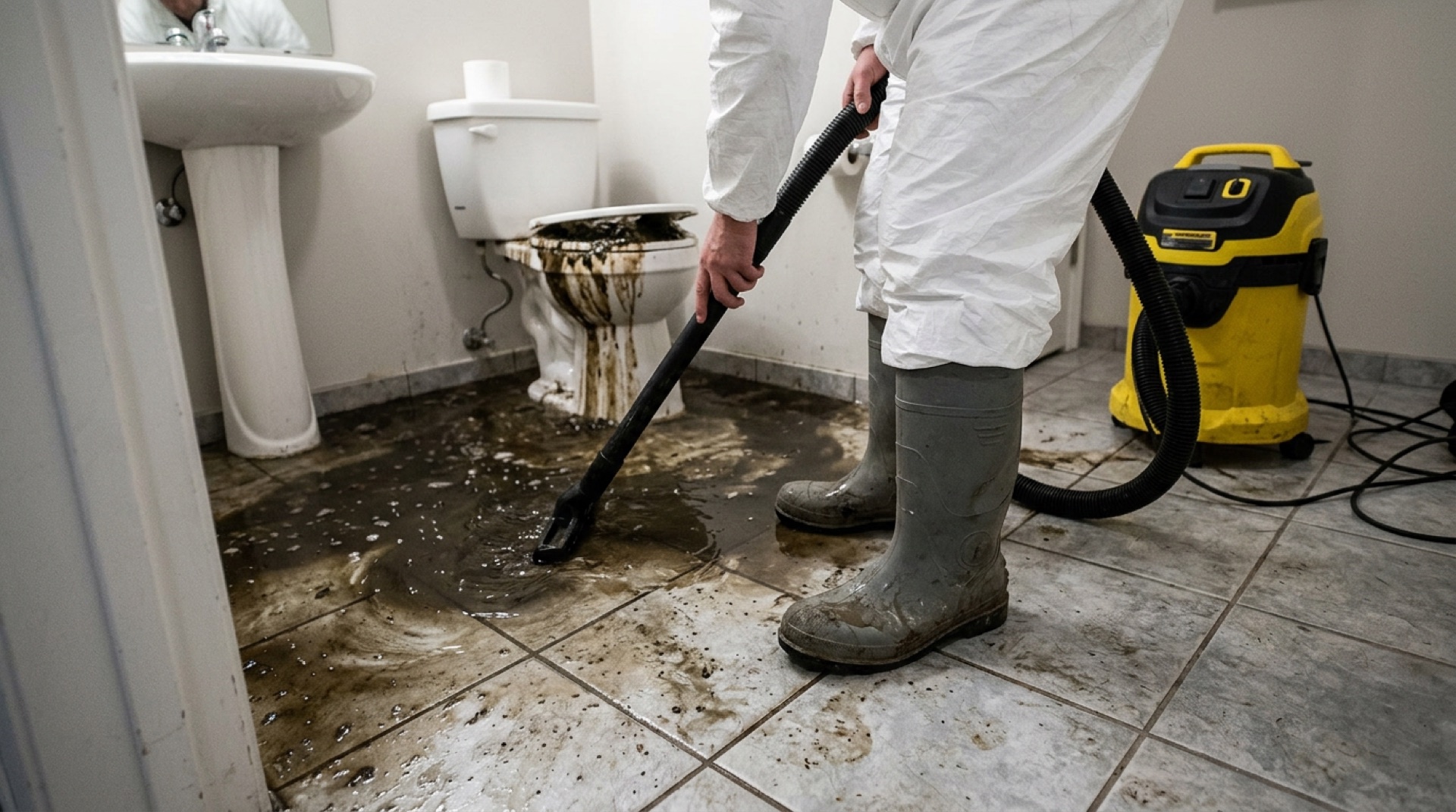
- Sewage is Category 3 water. The IICRC S500 standard classifies sewage as grossly contaminated, the most serious of its three water categories.
- Contact can make people sick. The CDC lists wound infections, skin rashes and stomach illness among the risks of contact with contaminated water.
- Porous materials usually come out. Carpet, pad, drywall and insulation soaked by sewage generally cannot be cleaned well enough to keep.
- We answer around the clock. Backups happen at night and on holidays, and our phone is answered 24/7.
- Estimates are free. We inspect, take moisture readings and explain the plan before work begins.
Is it a sewer backup or a toilet overflow?
The source changes how serious the cleanup is. A sewer backup pushes waste from the drain line up through the lowest fixtures in the house, usually a shower, tub or floor drain, and it is always Category 3.
A toilet overflow depends on what was in the bowl. Clear water from a bowl can still carry germs, and an overflow that includes waste is treated the same as a sewer backup. Our guide to Category 1, 2 and 3 water explains how the categories work.
| Situation | Typical source | How it is treated |
|---|---|---|
| Sewer line backup | Clog or break in the drain line to the street | Category 3: remove porous materials, disinfect, dry |
| Toilet overflow with waste | Clogged toilet | Category 3: same as a sewer backup |
| Toilet overflow, bowl water only | Stuck fill valve or clog without waste | Usually Category 2: clean, sanitize, dry |
| Washer or sink drain backup | Gray water from appliances | Category 2, or worse if it sits |
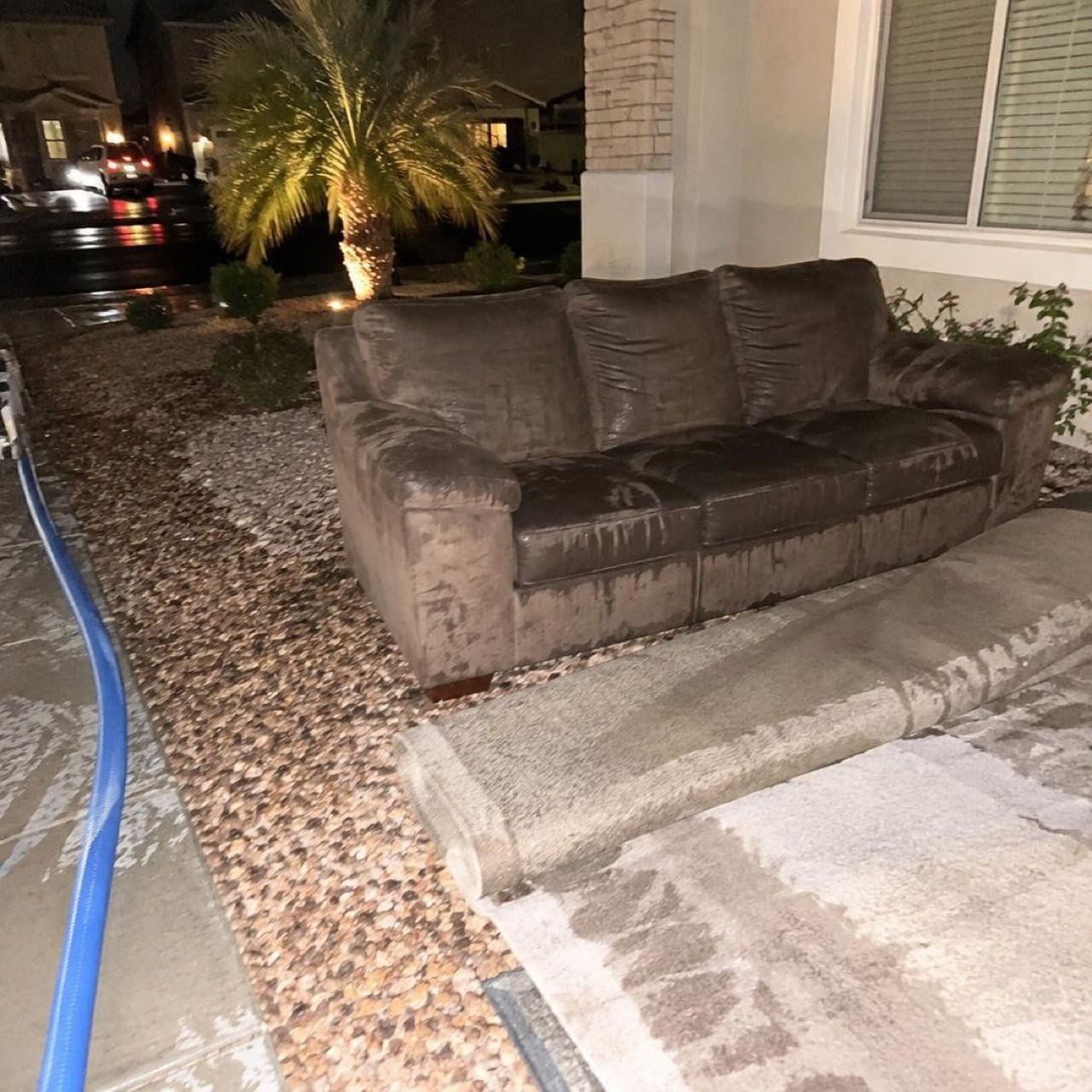
What are the health risks of sewage water?
Sewage carries bacteria, viruses and parasites that can make people sick through cuts, contact with the eyes and mouth, or contaminated hands. The CDC floodwater safety guidelines list wound infections, skin rash and stomach illness among the risks, and they advise washing clothes contaminated with flood or sewage water in hot water and detergent before wearing them again.
Children, older adults, pregnant women and anyone with a weakened immune system should stay away from the affected area until it is cleaned and disinfected. Pets should be kept out as well.
What should you do before we arrive?
Stop adding water to the drain system and keep people away from the mess. Every flush, shower or load of laundry can push more sewage into the house.
- Stop using toilets, sinks, showers, the dishwasher and the washing machine
- Close off the room and keep children and pets out
- Turn off the HVAC if the vents are near the affected area
- Take photos of the water, the fixtures it came from and the rooms it reached
- Do not try to mop sewage into other drains
- Wear gloves and boots if you must walk through, then wash up well
Water or smoke damage right now? A crew answers 24/7.
Call 725-525-3122What happens during sewage cleanup?
We start by finding where the water came from and how far it traveled, using moisture readings and photos. Then we contain the area so the work does not spread contamination to clean rooms.
Sewage water is extracted, and soaked carpet, pad, drywall and insulation are cut out and bagged for disposal. The slab, framing and hard surfaces are cleaned and disinfected, then dried with air movers and dehumidifiers until the readings show the materials are dry. The drying steps match our broader water damage restoration process, with more protective gear and more removal.
If the backup happened during a storm and outside water came in too, the job may overlap with our flood damage cleanup work. Once the area is clean and dry, we can rebuild what was removed.
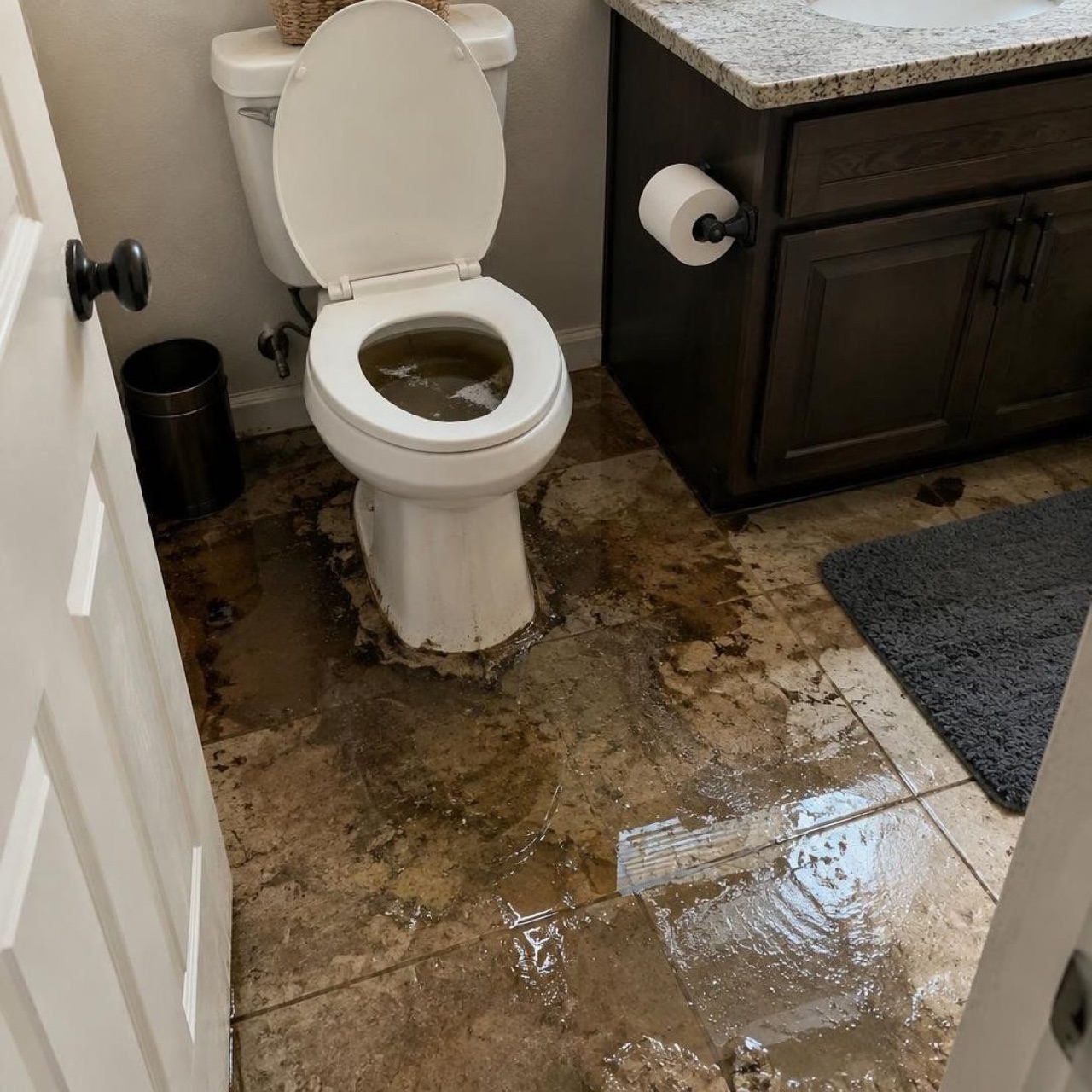
What causes sewage backups in Las Vegas homes?
Most backups start with a clog or damage in the private sewer line between the house and the public main. Sewer service here comes from the City of Las Vegas, the Clark County Water Reclamation District or another local provider, depending on where the property sits, and the line on private property is usually the owner's to maintain.
- Wipes, paper towels and other items flushed down toilets
- Cooking grease poured down the kitchen sink
- Tree roots growing into older clay or cracked lines
- Sagging or broken pipe under the slab
- Heavy storms that overload drains in low areas
Why call JGW Group for sewage cleanup?
We do the dirty part and the rebuild, so one team handles extraction, removal, disinfection, drying and reconstruction. We document each stage with photos and moisture records, which helps if you file a claim. Coverage for sewer backups often depends on a separate endorsement, and your insurer decides what the policy pays.
Where do we provide sewage cleanup?
We are based at 6823 W Post Rd in Southwest Las Vegas and work on homes and businesses across Las Vegas, Henderson, North Las Vegas, Summerlin, Spring Valley, Enterprise and Paradise. Call 725-525-3122 day or night for a free estimate.
“They even came out on a holiday eve to assess the damage and did all the repair work in a timely manner.”
Sarah Jane, Google reviewFrequently asked questions
Can I clean up sewage myself?
A small toilet overflow on tile can be cleaned with gloves, boots and a disinfectant. A sewer backup that reached carpet, drywall or more than one room is different, because sewage is Category 3 water and porous materials usually have to be removed. Professional cleanup also includes drying and moisture checks so hidden wet areas do not grow mold.
Is sewage water dangerous to breathe?
The bigger risk is touching sewage or the surfaces it reached, which can spread bacteria and viruses through cuts, eyes and mouths. Odors can still be unpleasant and irritating, so ventilate if you can do it safely and keep vulnerable people, including young children and anyone with a weak immune system, out of the area.
Does homeowners insurance cover sewer backups in Nevada?
It depends on your policy. Many standard homeowners policies limit or exclude sewer and drain backup unless you added a water backup endorsement. Damage from a sudden pipe break may be handled differently. Your insurer decides coverage, and JGW Group provides photos, moisture readings and a written scope to support your claim.
Who is responsible for a sewer line backup?
In most cases the property owner is responsible for the private sewer line from the house to the connection at the public main, and the sewer provider handles the main itself. Providers in the valley include the City of Las Vegas and the Clark County Water Reclamation District. A plumber can camera the line to find the cause.
Do you fix the sewer line too?
We focus on cleaning, disinfecting, drying and rebuilding the parts of the home the sewage damaged. The clog or broken line itself is plumbing work, so you will need a licensed plumber to clear or repair it. We can start cleanup as soon as the source is stopped so the damage does not spread.
How long does sewage cleanup take?
Extraction, removal of contaminated materials and disinfection often happen on the first visit. Drying usually takes several more days depending on how much water came in and how long it sat. We check moisture during drying and do not start rebuilding until readings show the slab and framing are dry.
Keep children, pets and anyone with a weakened immune system away from sewage until the area has been cleaned and disinfected.