
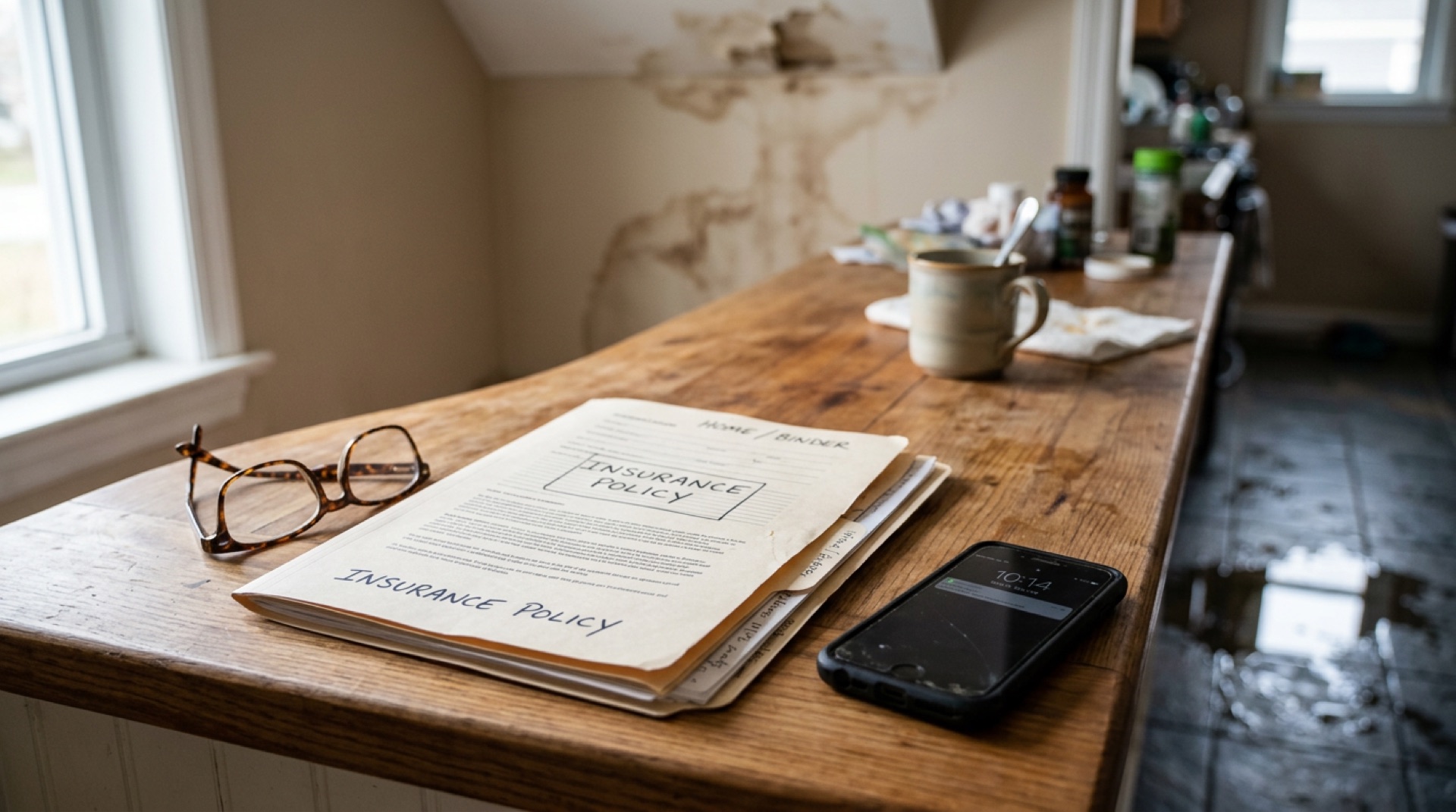
Does a standard Nevada homeowners policy cover water damage?
Usually yes for sudden, accidental water damage, and usually no for damage that built up over time or came from a flood. That is the general pattern in most policies sold in Nevada, but your own policy wording and your insurer decide every claim.
The Nevada Division of Insurance notes that homeowners policies do not cover every risk and that flood is a standard exclusion requiring a separate policy or endorsement. Nevada law does not require homeowners insurance, though most mortgage lenders do.
This article explains common policy patterns so you know what questions to ask. It is general information, not legal or insurance advice. Read your policy and talk with your agent or adjuster about your specific claim.
What is the difference between sudden and gradual water damage?
Sudden damage happens all at once and was not something you could reasonably see coming. Gradual damage develops over weeks or months, often from a leak that was slow, hidden or ignored. Insurers draw the coverage line between those two.
The table below shows how common Las Vegas water losses are often treated. Treat it as a guide to the conversation with your adjuster, not a coverage decision.
| Type of water loss | Often covered? | Why |
|---|---|---|
| Burst supply line under a sink or behind a toilet | Often yes | Sudden and accidental discharge |
| Washing machine hose that splits | Often yes | Sudden failure of a household appliance |
| Water heater that ruptures | Often yes for the water damage | The heater itself is usually not covered |
| Slow drip under a sink for months | Often no | Gradual leak or lack of maintenance |
| Slab leak | Varies | Many policies cover access and resulting damage, not the pipe |
| Roof leak during a monsoon storm | Varies | Depends on storm damage versus an old, worn roof |
| Monsoon flash flood entering from outside | Usually no | Flood is excluded and needs flood insurance |
| Sewer or drain backup | Only with an endorsement | Often excluded unless you added backup coverage |
Is flood damage covered in Las Vegas?
No, not under a standard homeowners policy. Surface water that flows into the house from outside, such as monsoon runoff through a garage or patio door, is generally treated as flood. Flood coverage comes from a separate policy.
In the United States, most flood policies are written through FEMA's National Flood Insurance Program (NFIP), and private flood policies are also sold. NFIP policies generally have a 30-day waiting period before they take effect, so buying one after a storm is in the forecast is usually too late.
Clark County gets few rainy days, but monsoon storms can drop heavy rain in a short time. If your home sits near a wash or in a low spot on the street, ask your agent whether flood coverage makes sense.
What usually is not covered?
Policies tend to exclude damage that comes from age, neglect or long-term exposure. Insurers expect homeowners to fix small problems before they become big ones.
Common exclusions or limits include:
- Repeated or continuous seepage over weeks or months.
- Wear and tear, rust, corrosion and deterioration, including an old water heater that finally fails.
- Mold, often limited to a small amount of coverage or excluded unless it resulted from a covered sudden loss.
- Flood and surface water from outside the home.
- Sewer and drain backup, unless you bought an endorsement.
- The broken part itself, such as the failed pipe or appliance, even when the water damage it caused is covered.
Dealing with this right now? Get a free estimate.
Call 725-525-3122What should you do first to protect your claim?
Stop the water, document everything, and start drying right away. Most policies require you to take reasonable steps to prevent further damage, so waiting can hurt your claim as well as your home.
A good first hour looks like this:
- Shut off the water at the main valve or the fixture, and turn off power to wet areas if it is safe.
- Take photos and video of the water, the source and every damaged room before anything is moved.
- Call your insurer or agent to open the claim and write down the claim number.
- Call a restoration company to extract water and start drying. Keep receipts for anything you pay.
- Save the failed part, such as a split hose or cracked fitting, in case the adjuster wants to see it.
Does your deductible apply to water damage?
Yes, in most policies the standard deductible applies to a covered water loss, and some policies carry a separate or higher deductible for water damage. Check the declarations page of your policy so you know the number before you file.
For a small leak that dried quickly, the repair may cost less than the deductible. In that case some homeowners choose not to file. A free estimate gives you a realistic picture of the damage so you can make that call with your agent.
How does a restoration company help with the claim?
A restoration company documents the damage and the drying so the adjuster has facts to work from. It does not decide coverage. Your insurer does.
With insurance claims assistance, JGW Group takes photos, records moisture readings each day, and keeps a clear record of what was removed and why. That file helps the adjuster see the cause and extent of the loss. Customer Carol Denson wrote in a Google review: "The team guided us through the insurance claim process."
You can use any restoration company you choose. Your insurer may suggest one, but in most cases the choice is yours. Ask the adjuster if you are unsure.
What about slab leaks and hidden leaks?
Hidden leaks are where coverage gets most complicated. A slab leak can run for weeks before you see a warm spot or a wet floor, and insurers may ask how long it was leaking.
Many policies pay to tear out and replace the floor needed to reach the pipe and repair the damage it caused, while excluding the pipe repair itself. Others limit coverage if the leak was gradual. Learn the signs of a slab leak in Las Vegas so you can catch one early, and read more about full water damage restoration after a covered loss.
Disclaimer: this article is general information and is not legal or insurance advice. Coverage depends on your policy and your insurer's decision.
Frequently asked questions
Will my Nevada homeowners insurance pay for a burst pipe?
In most policies, water damage from a pipe that bursts suddenly is covered, subject to your deductible and policy limits. The cost of fixing the pipe itself may not be covered. Your insurer decides after reviewing the cause. JGW Group can document the damage and drying in Las Vegas so the adjuster has clear records to work from.
Does homeowners insurance cover monsoon flooding in Las Vegas?
Usually not. Rainwater that flows into the home from the ground, street or yard is typically treated as flood, which standard homeowners policies exclude. Flood coverage comes from a separate policy, most often through FEMA's National Flood Insurance Program, which usually has a 30-day waiting period. Wind or roof damage from the same storm may be handled differently.
Should I start cleanup before the adjuster comes?
Most policies expect you to prevent further damage, so stopping the water and starting extraction and drying is usually the right move. Photograph everything first and keep receipts. Do not throw away damaged items until you have documented them or the adjuster says it is fine. Ask your insurer if you are unsure what to keep.
Can JGW Group tell me if my claim will be approved?
No. Only your insurer can decide coverage. What JGW Group can do is document the source, the affected areas, the moisture readings and the work performed, then share that record with you and your adjuster. Clear documentation helps the adjuster make a decision based on facts. For coverage questions, talk to your agent or adjuster.