
How long does it usually take to dry a water-damaged room?
A clean-water leak caught early usually dries in about three to five days once standing water is extracted and drying equipment is running. Restoration contractors commonly cite that range, and it matches what moisture meters tend to show on drywall and carpet pad in a typical home.
That number is a starting point, not a promise. The real finish line is when moisture readings in the wet materials match readings in similar dry materials elsewhere in the house. A wall can feel dry to your hand for days before the inside of the drywall or the bottom plate behind it is actually dry.
Drying also starts the clock on mold. The EPA says to dry water-damaged areas and items within 24-48 hours to prevent mold growth. Full drying takes longer than that, which is why getting water out and air moving in the first day matters so much.
How long do different materials take to dry?
Each material holds water differently, so one room can have three different finish dates. Porous, thin materials give up water fastest. Dense, layered materials hold it the longest.
The table below shows typical ranges with professional drying equipment in place. Your home may run faster or slower depending on how long the water sat and whether it soaked into layers.
| Material | Typical drying time with equipment | What slows it down |
|---|---|---|
| Carpet and pad | 1 to 3 days if pad is saved | Water that wicked into the subfloor or tack strip |
| Drywall (single layer) | 2 to 4 days | Vinyl wallpaper, oil paint, insulation behind it |
| Baseboards and bottom plates | 3 to 5 days | Wood trapped behind caulk and paint |
| Kitchen and bath cabinets | 3 to 7 days | Toe kicks and cabinet backs that trap moisture |
| Hardwood flooring | 7 to 14 days or more | Cupping, glue-down installs, moisture in the slab below |
| Concrete slab | 1 to 3 weeks or more | Thickness, floor coverings left in place, deep saturation |
Why do Las Vegas homes dry differently?
Dry desert air helps on the surface but does not do the job alone. Outdoor humidity in Las Vegas is low most of the year, yet a closed house with a wet carpet and wet drywall can build up humid air fast, especially with the air conditioning off or cycling.
Most Las Vegas homes sit on a concrete slab rather than a raised floor. Water that runs under flooring soaks into the slab and the bottom of the walls, and concrete releases that water slowly. That is the most common reason a job here takes longer than the homeowner expects.
Summer monsoon storms raise indoor humidity for short stretches, and stucco walls can hold water after a roof or window leak. Those jobs often need moisture checks inside the wall cavity, not just on the face of the drywall.
Dealing with this right now? Get a free estimate.
Call 725-525-3122What happens during professional drying?
Professional drying follows a set order: remove the water, set up equipment, measure, adjust, and confirm. Each step shortens the total time. Skipping one is how hidden moisture gets left behind.
Here is what a typical structural drying job looks like from start to finish:
- Extraction: truck-mounted or portable extractors pull standing water out of carpet and pad, which removes far more water than any amount of fans.
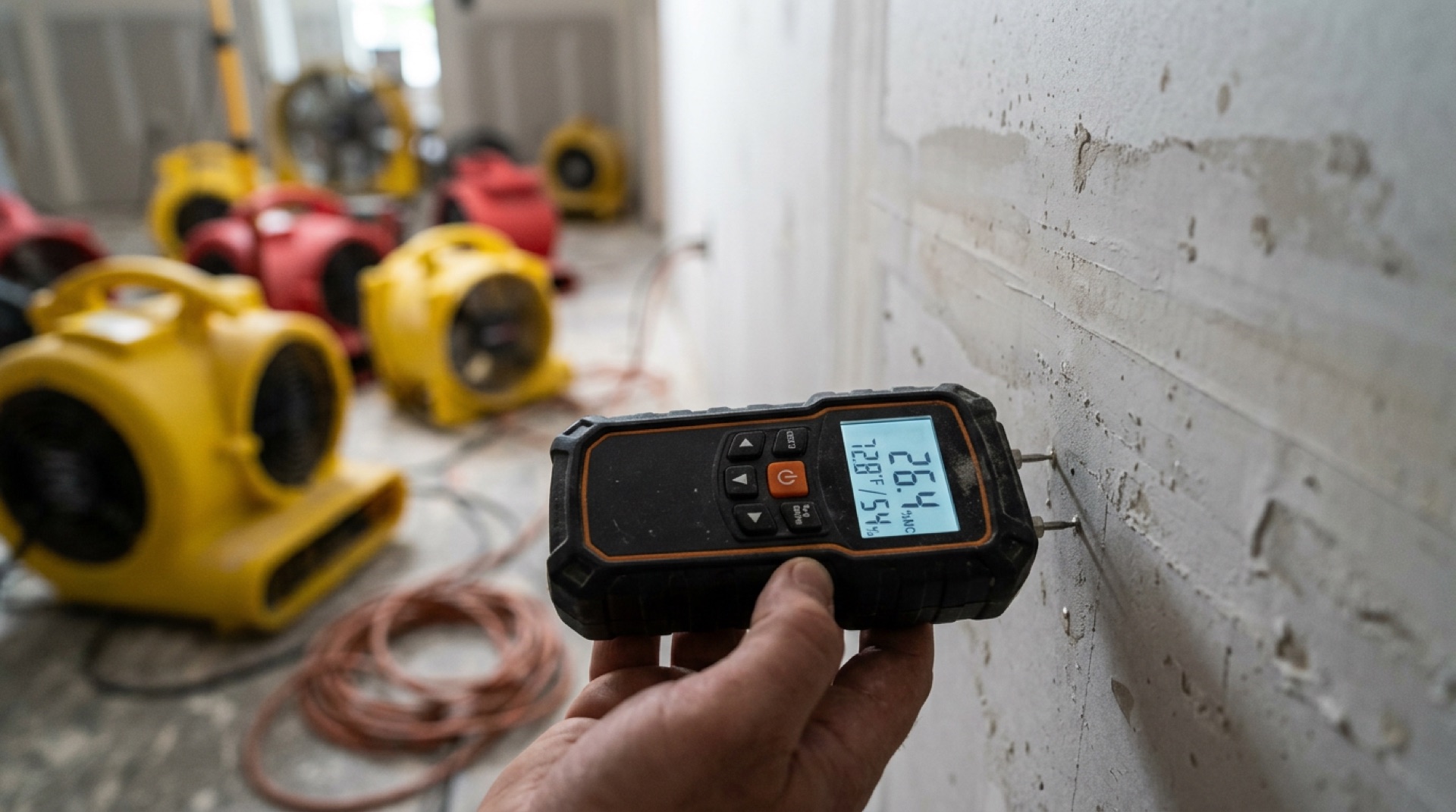
- Moisture mapping: meters and thermal readings find where water traveled, including behind baseboards and under cabinets.
- Equipment setup: air movers push air across wet surfaces while dehumidifiers pull that moisture out of the room.
- Controlled removal: wet insulation, swollen baseboards or pad that will not dry are removed so the structure behind them can dry.
- Daily monitoring: readings are logged each day, and equipment is moved or added where numbers are not dropping.
- Final readings: equipment comes out only when materials reach dry standard, and those readings go into the file for your insurer.
What can make drying take longer?
Time, contamination and trapped layers are the three things that stretch a drying schedule. Water that sat for days has soaked deeper. Water from a dirty source means some materials have to be removed instead of dried.
Other common slowdowns include:
- Water that sat over a weekend or while you were traveling before anyone found it.
- Category 2 or 3 water, such as a dishwasher drain backup or sewage, where porous items are removed rather than dried.
- Layered flooring, like tile over a backer board or vinyl plank over pad, that blocks evaporation.
- Closed wall cavities with insulation, which often need small holes or baseboard removal to let air reach the framing.
- Shutting equipment off at night to save noise or power, which resets progress.
Can I dry water damage myself with fans?
Fans dry what you can see, not what is inside the wall or slab. For a small spill on tile that you wiped up within minutes, household fans and an open window are usually enough. For anything that soaked carpet, walls or cabinets, consumer fans rarely remove enough water.
One of our Google reviewers, Oliver Nelson, put it simply: "Shop vac was not cutting it so called the pros who were able to fully extract all moisture from carpet and walls saving me from having to replace all my carpet." Getting extraction done early is often the difference between drying a carpet and replacing it.
If you are not sure how far the water went, a free moisture check is the fastest way to find out. Learn what a full water damage restoration job includes so you know what to expect.
How do you know when drying is finished?
Drying is finished when moisture readings say so, not when the calendar says so. A good restoration file shows the starting readings, the daily readings and the final readings for each wet area.
Those records protect you. They show your insurer the work was needed, and they show the next contractor that the walls and floor were dry before new drywall, paint or flooring went in. Sealing in moisture is how mold shows up months later. If you are worried about that, read how fast mold grows after water damage.
Frequently asked questions
How long do dehumidifiers and air movers stay in my house?
Most homes keep drying equipment running for about three to five days, and longer when hardwood, cabinets or the concrete slab got wet. JGW Group checks moisture every day and removes equipment only when readings show the materials are dry. Running the equipment around the clock, including overnight, keeps the schedule as short as possible.
Can I stay in my Las Vegas home while it dries?
Many families stay home during drying. The equipment is noisy and warms the rooms, and a few areas may be blocked off. If the water was contaminated, such as a sewage backup, or if large sections of drywall are removed, staying elsewhere for a few days may make more sense. Your insurer may cover extra living costs, but the policy decides that.
Why does my wall feel dry but the meter still reads wet?
The painted surface of drywall dries first, while the gypsum core, the bottom plate and the insulation behind it hold moisture longer. A moisture meter reads below the surface. Closing up or painting a wall that still reads wet traps that water inside, which can lead to mold, peeling paint and odor later.
Does a concrete slab really take weeks to dry?
It can. Concrete is dense and releases water slowly, and most Las Vegas homes are built slab-on-grade. Lifting floor coverings and using dehumidifiers speeds it up, but a deeply soaked slab may need one to three weeks or more before new flooring goes down. Moisture testing tells you when it is ready.