
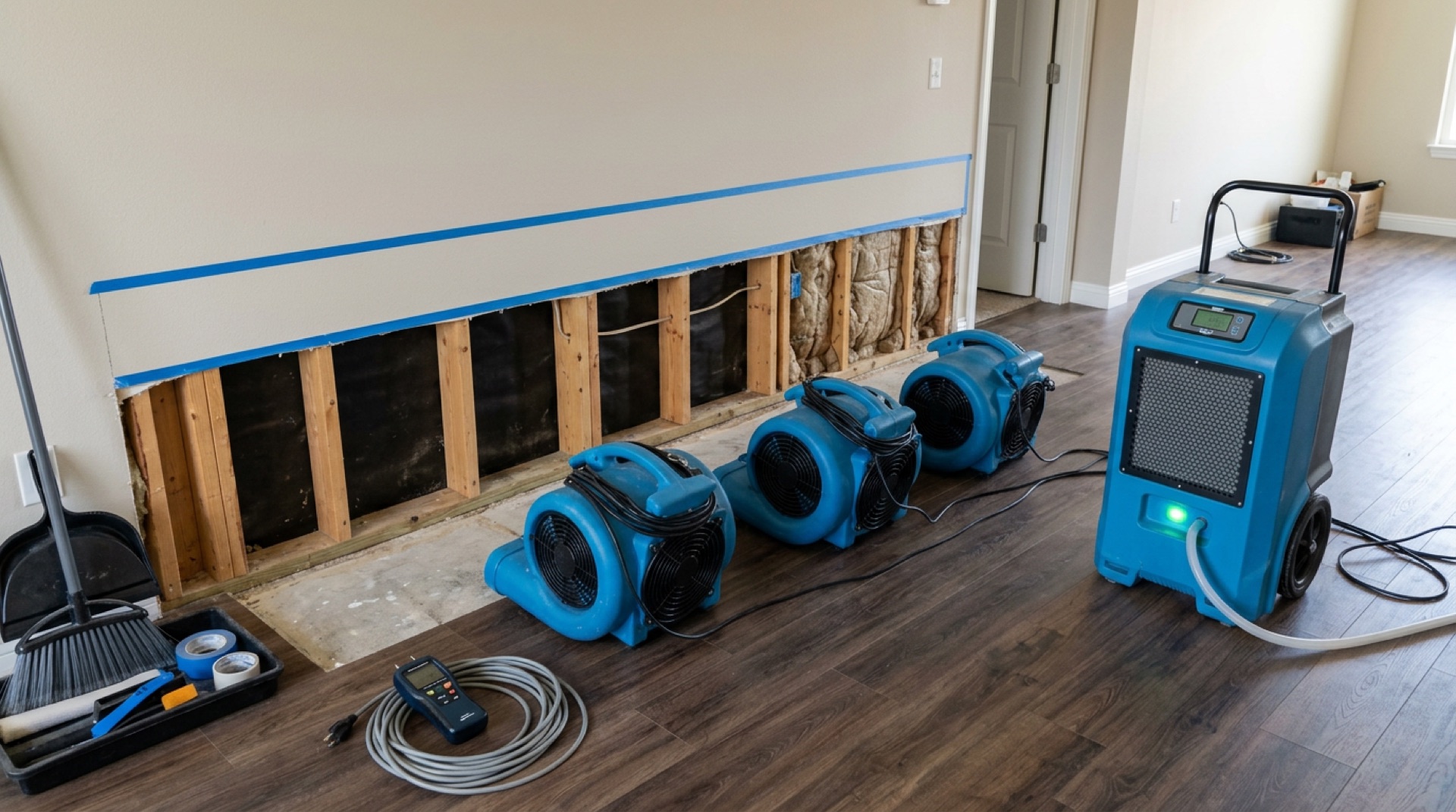
- Dry is a number. Moisture readings, not touch, decide when a wall or floor is ready to close up.
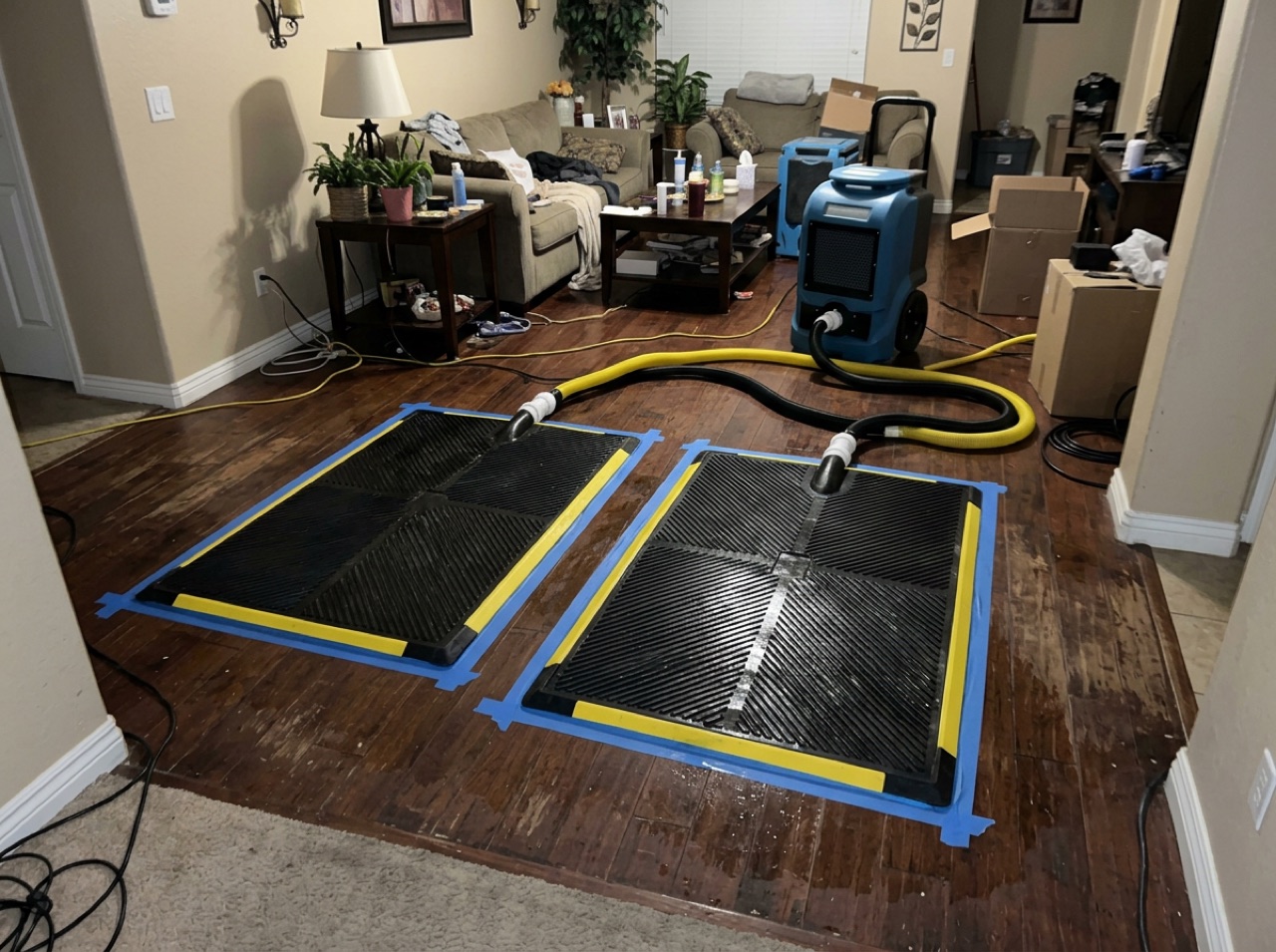
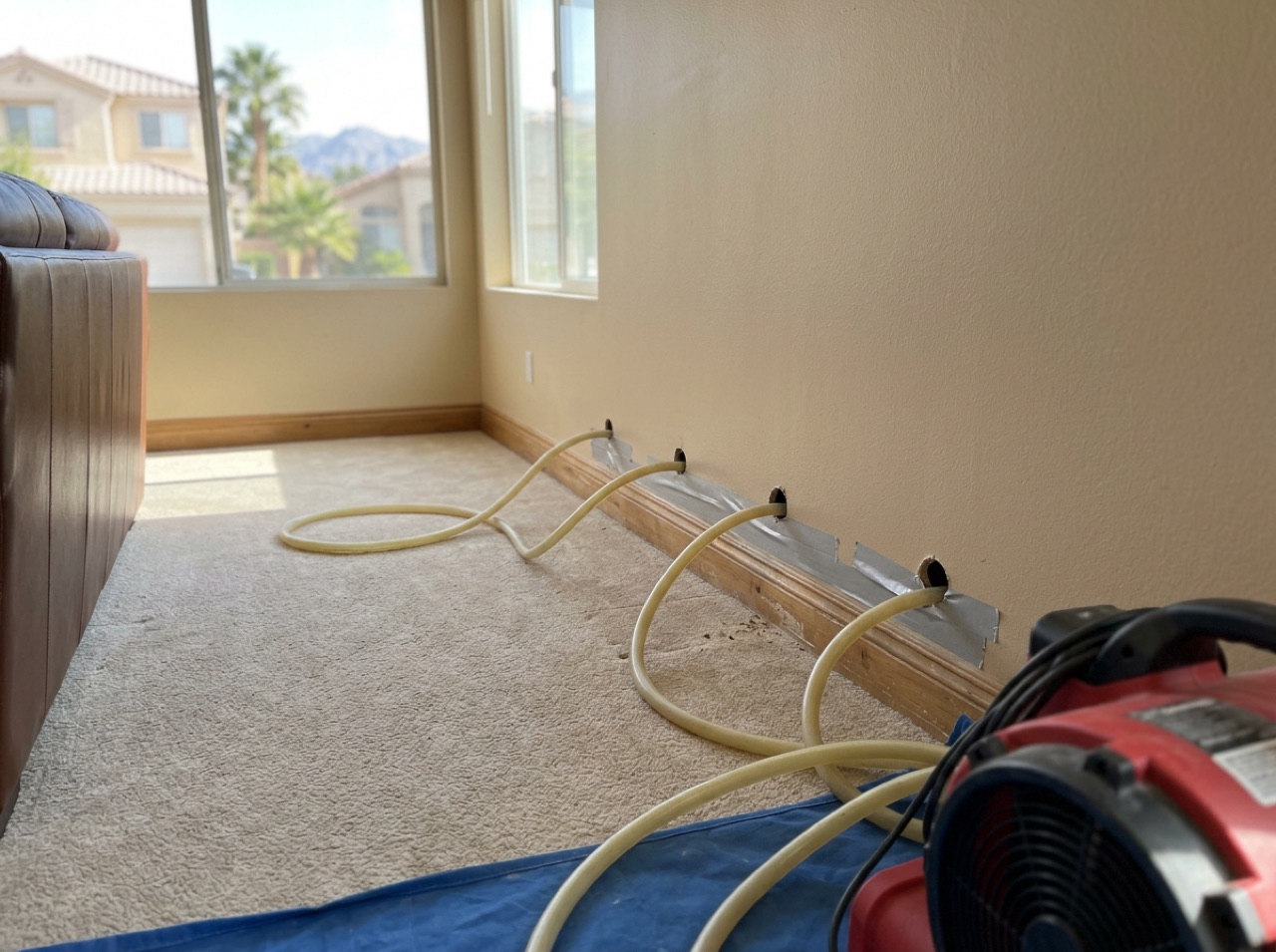
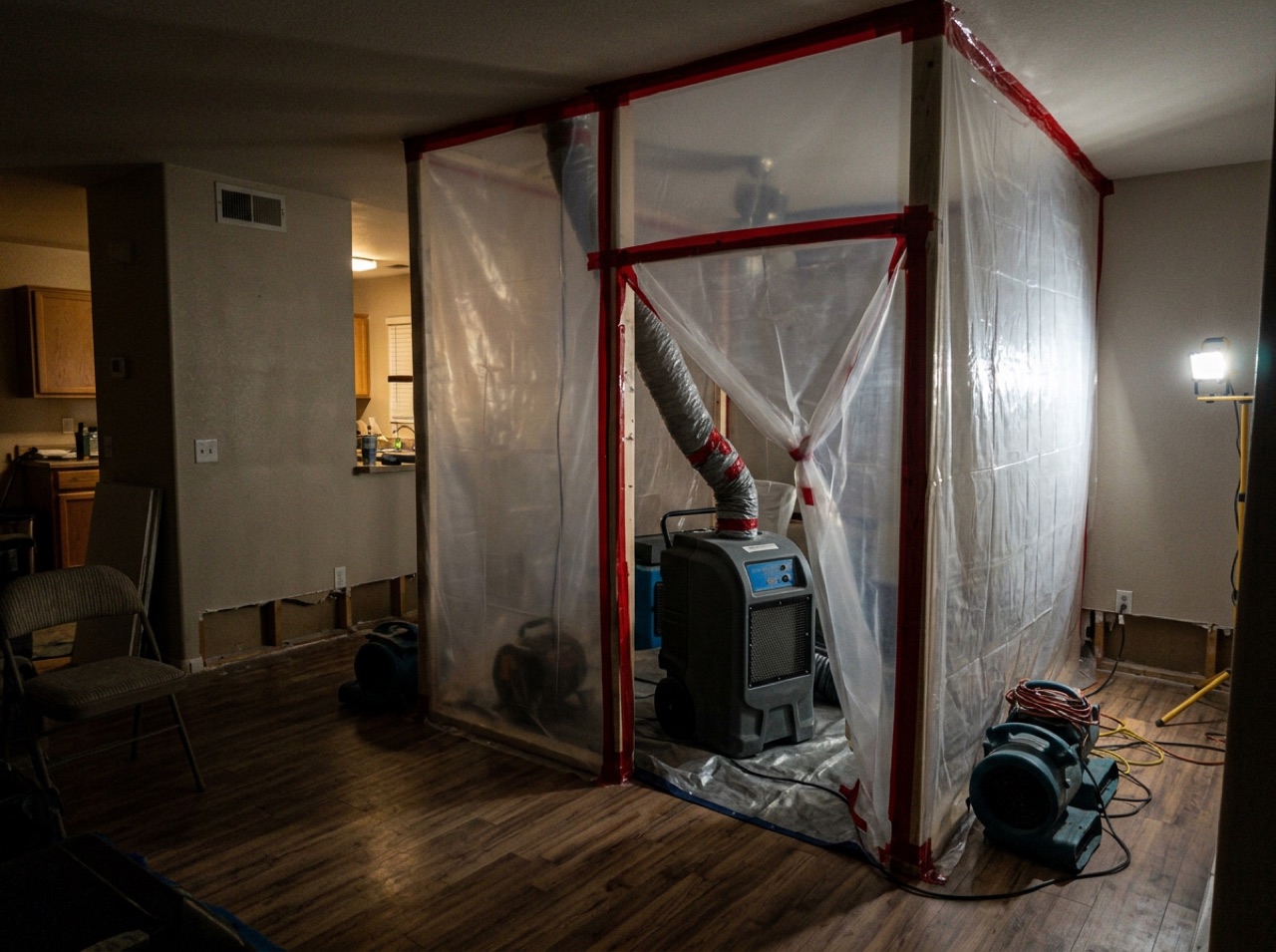
- Air movers plus dehumidifiers. Air movers pull water out of materials and dehumidifiers remove it from the air.
- Desert air is not enough. Low outdoor humidity does not dry the inside of a wall cavity or the slab under flooring.
- Monitored through the job. Readings are checked during drying and recorded for your claim.
- Leads into rebuild. JGW Group handles reconstruction once the structure is dry.
What is structural drying, and when do you need it?
Structural drying removes water that has soaked into the building itself: drywall, framing, subfloor, cabinets and concrete. You need it any time water sat long enough to wick into materials, not just wet the surface.
It is the stage of water damage restoration that decides whether a repair lasts. The IICRC S500 standard for professional water damage restoration covers psychrometry and drying technology as a core part of the work, because closing up wet materials leads to swelling, odor and mold.
- Drywall that feels cool, soft or damp at the bottom
- Baseboards or door casings swelling or separating
- Cabinet bases that stayed wet after a leak
- Flooring that is cupping, lifting or squeaking
- A damp or musty smell after the water is gone
- Any leak that ran for more than a few hours
What can you do before drying starts?
Stop the water, remove standing water if it is safe and leave wet building materials in place. Tearing out drywall or flooring too early can make the claim harder and the drying slower.
Run your AC to keep indoor air moving and cooler, and open closet and cabinet doors in wet rooms. Move furniture and belongings off wet floors. Avoid running a space heater to speed things up; heat without dehumidification can push moisture into other parts of the house.
- Shut off the water source
- Remove standing water only if it is clean and safe to reach
- Open cabinet and closet doors in the wet area
- Move furniture, rugs and boxes off wet floors
- Photograph wet areas before anything is removed
- Leave drywall, baseboards and flooring in place for assessment
How does JGW Group dry a structure?
The process follows a simple loop: measure, set equipment, measure again. Equipment moves or comes out as readings show each area drying.
First, moisture readings map the wet area, which is often larger than the visible stain. Materials that cannot be saved, such as soaked pad or crumbling drywall, are removed. Air movers are aimed across wet surfaces and dehumidifiers pull the water out of the air. Readings are checked during drying and recorded. When the numbers show materials are dry, repairs begin. Concrete takes the most patience, which is why slab leak water damage jobs often run longer.
| Material | How it holds water | Drying notes |
|---|---|---|
| Carpet and pad | Pad soaks up and holds water | Carpet often dries in place; pad is commonly replaced |
| Drywall | Wicks water upward from the floor | Can dry in place if caught early; replaced if soft or crumbling |
| Wood framing and subfloor | Absorbs water slowly, releases it slowly | Needs steady airflow and dehumidification |
| Cabinets | Particleboard swells; spaces under them trap water | Toe kicks may be removed to reach the cavity |
| Concrete slab | Dense, holds water deep inside | Usually the slowest material to dry |
Water or smoke damage right now? A crew answers 24/7.
Call 725-525-3122Why does structural drying matter in Las Vegas?
People assume the desert will dry everything, but the inside of a wall or the slab under flooring does not get the benefit of dry outdoor air. Local construction makes measured drying even more important.
Most Las Vegas homes are slab-on-grade, so water from a leak spreads across concrete under carpet, tile and plank flooring. Exterior walls are commonly stucco over framing, which can hold moisture inside the wall. Summer monsoon storms can bring water in through roofs, windows and doors. And the EPA says wet materials should be dried within 24 to 48 hours to prevent mold growth, whatever the weather outside.
- Slab foundations that hold water under flooring
- Stucco exterior walls that slow drying inside the cavity
- Attic AC units and lines that leak into ceilings
- Monsoon rain entering through roofs and openings
Why choose JGW Group for structural drying?
Drying and rebuilding go best when one team handles both. JGW Group takes the job from extraction and drying through full reconstruction.
The team uses moisture readings, extraction equipment, air movers and dehumidifiers, and monitors moisture throughout the drying. Readings and photos are documented, and you get guidance through the insurance claim. Your insurer decides coverage. For a closer look at timing, read how long water damage takes to dry.
Where does JGW Group provide structural drying?
JGW Group is based at 6823 W Post Rd #137 in southwest Las Vegas and serves homes and businesses across the valley.
Service areas include Las Vegas, Henderson, North Las Vegas, Summerlin, Spring Valley, Enterprise, Paradise and Boulder City. Calls are answered 24/7.
“Small water leak caused some water to flood hallway. Shop vac was not cutting it so called the pros who were able to fully extract all moisture from carpet and walls saving me from having to replace all my carpet.”
Oliver Nelson, Google reviewFrequently asked questions
How long does structural drying take?
It depends on how much water there was, how long it sat and which materials got wet. Drywall and carpet usually dry faster than wood subfloor, cabinets or a concrete slab. Drying continues until moisture readings show materials are ready for repairs, rather than stopping on a fixed day. JGW Group checks readings during the job and tells you where things stand.
How do you know when a wall or floor is actually dry?
By measuring it. Moisture readings are taken in wet areas and compared with dry areas of the same material elsewhere in the home. When the wet areas match the dry ones, the material is ready. Touch is not reliable, because a surface can feel dry while the inside of the drywall, wood or concrete is still holding water.
Can I stay home while drying equipment runs?
Most people do for clean water losses. Air movers are noisy and the rooms get warm, so many families sleep in another part of the house. Keep doors and windows closed as directed so dehumidifiers work efficiently, and keep kids and pets away from cords. Sewage or floodwater losses are different, and you may need to stay out of affected rooms.
What happens if drying stops too early?
Moisture left in drywall, framing, cabinets or concrete gets sealed in when new paint, baseboards or flooring go on. That can lead to swelling, peeling paint, buckled floors, musty odors and mold growth later. It can also complicate an insurance claim. That is why JGW Group relies on moisture readings, not a calendar, to decide when drying is done.
Will drying equipment raise my electric bill?
Air movers and dehumidifiers use electricity, and running them for several days can show up on your bill, especially in summer when the AC is also working. Note your meter reading when equipment arrives and when it leaves, and ask your insurer whether that extra power use can be included in your claim.
Keep children and pets away from drying equipment cords, and do not unplug or move equipment without checking with the team.