
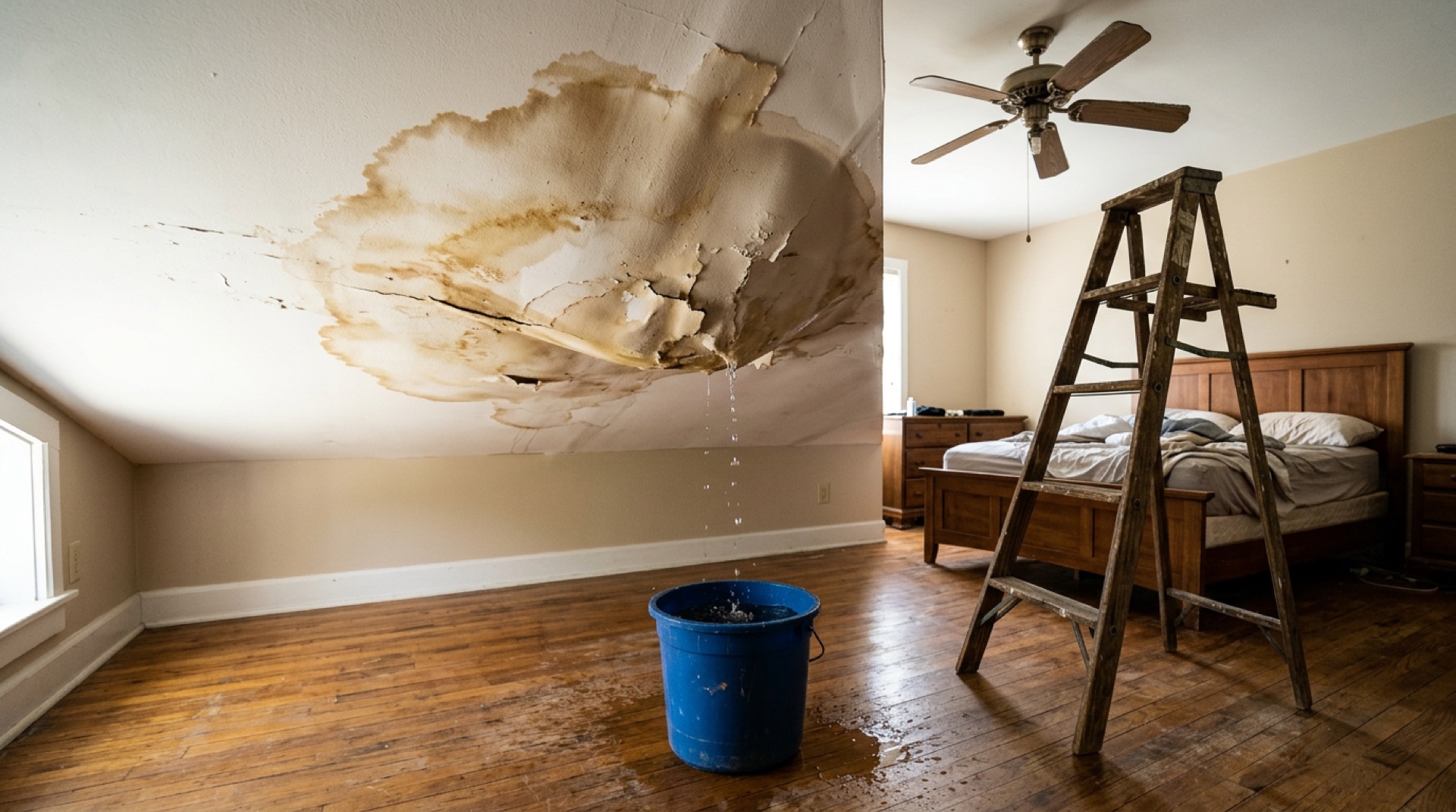
- A stain is a symptom. Water above the ceiling has to be found and stopped before any repair holds.
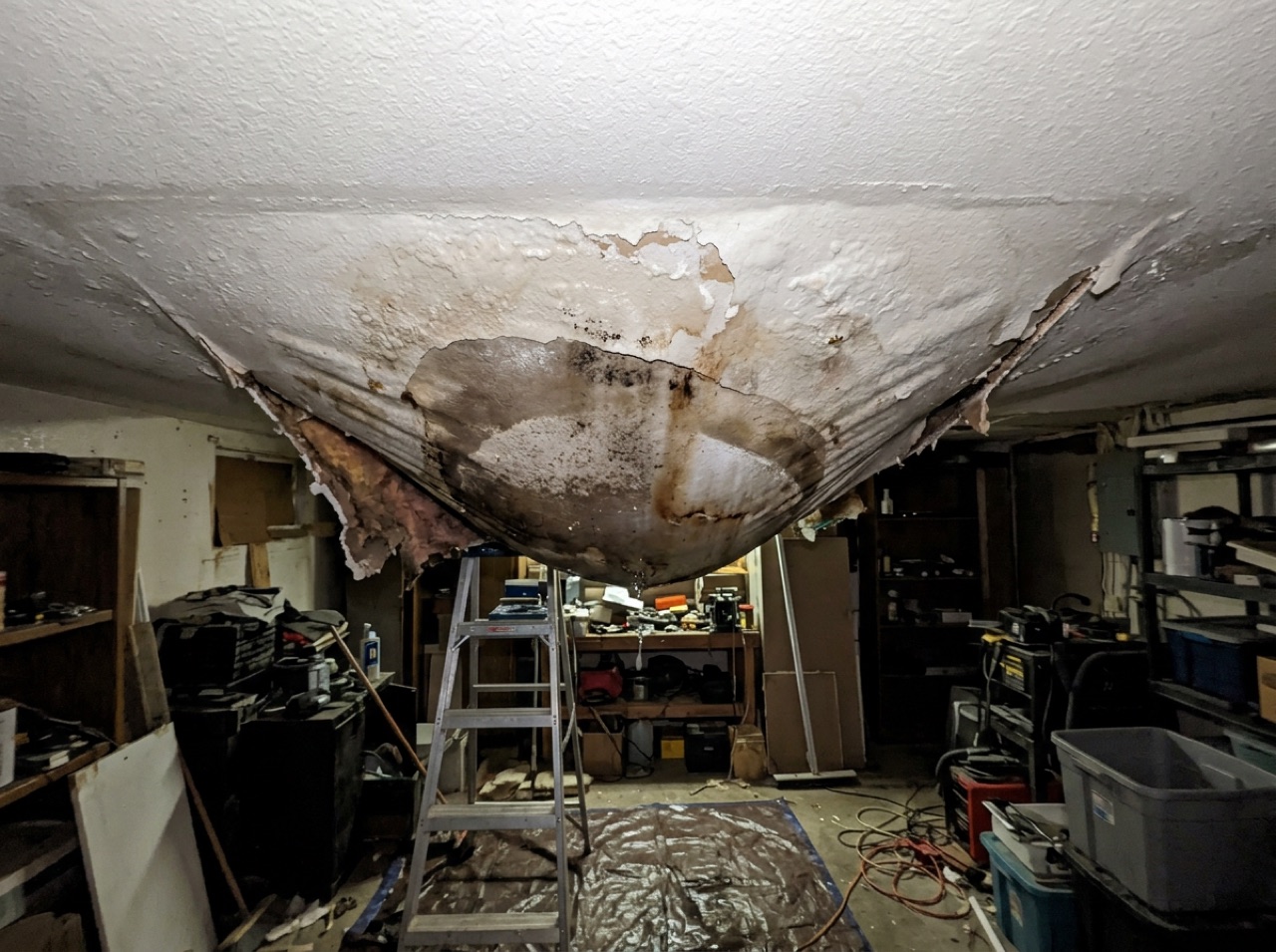
- Sagging means danger. Wet drywall is heavy and can drop without warning. Stay out from under it.
- Common local sources. AC condensate overflow, upstairs plumbing and roof leaks during monsoon storms cause most ceiling calls.
- Dry, then rebuild. Moisture readings decide when new drywall, texture and paint can go up.
- Claim support. Damage and drying are documented. Your insurer decides coverage.
How serious is the water damage on your ceiling?
A small, dry stain that has not grown may be minor, while bubbling paint, soft drywall or any sag means water is still in the ceiling. The longer wet drywall and insulation stay wet, the more likely they need to come down.
Use the table below as a rough guide. Any sag, crack or active drip should be treated as urgent.
| What you see | What it usually means | What to do |
|---|---|---|
| Old, dry stain that has not changed | Past leak, may be resolved | Check for moisture before painting over it |
| Spreading stain or bubbling paint | Water still present above | Find and stop the source; call for readings |
| Soft or cracked drywall | Drywall soaked and weakened | Stay clear; likely replacement |
| Sagging or bulging ceiling | Heavy water load, risk of collapse | Leave the room; shut off water and power to the area |
| Musty smell or dark spotting | Moisture has been there a while | Moisture check and possible mold assessment |
What should you do before help arrives?
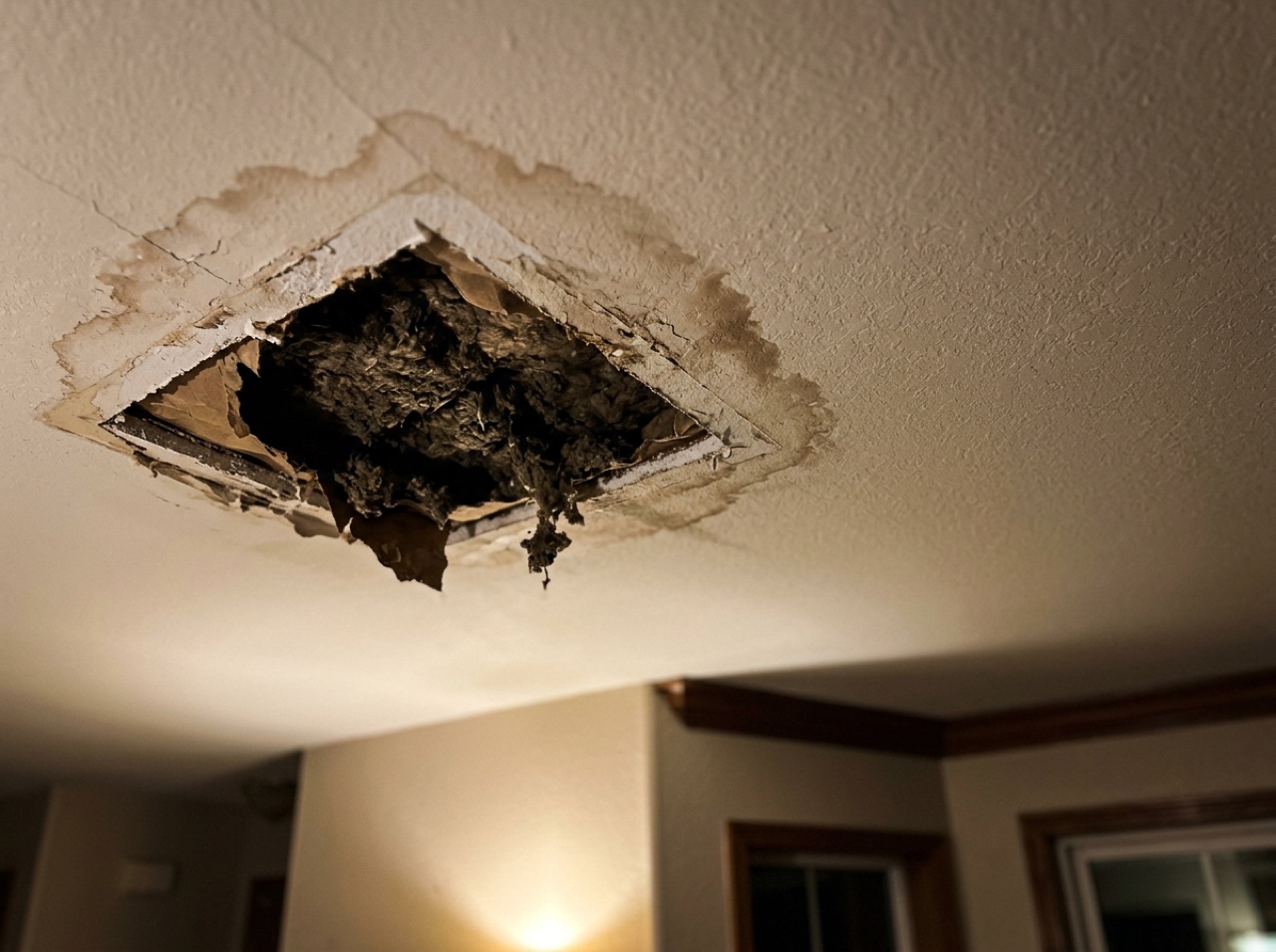
Stop the water, keep people out from under the wet area and protect what is below. Do not poke or push on a sagging ceiling.
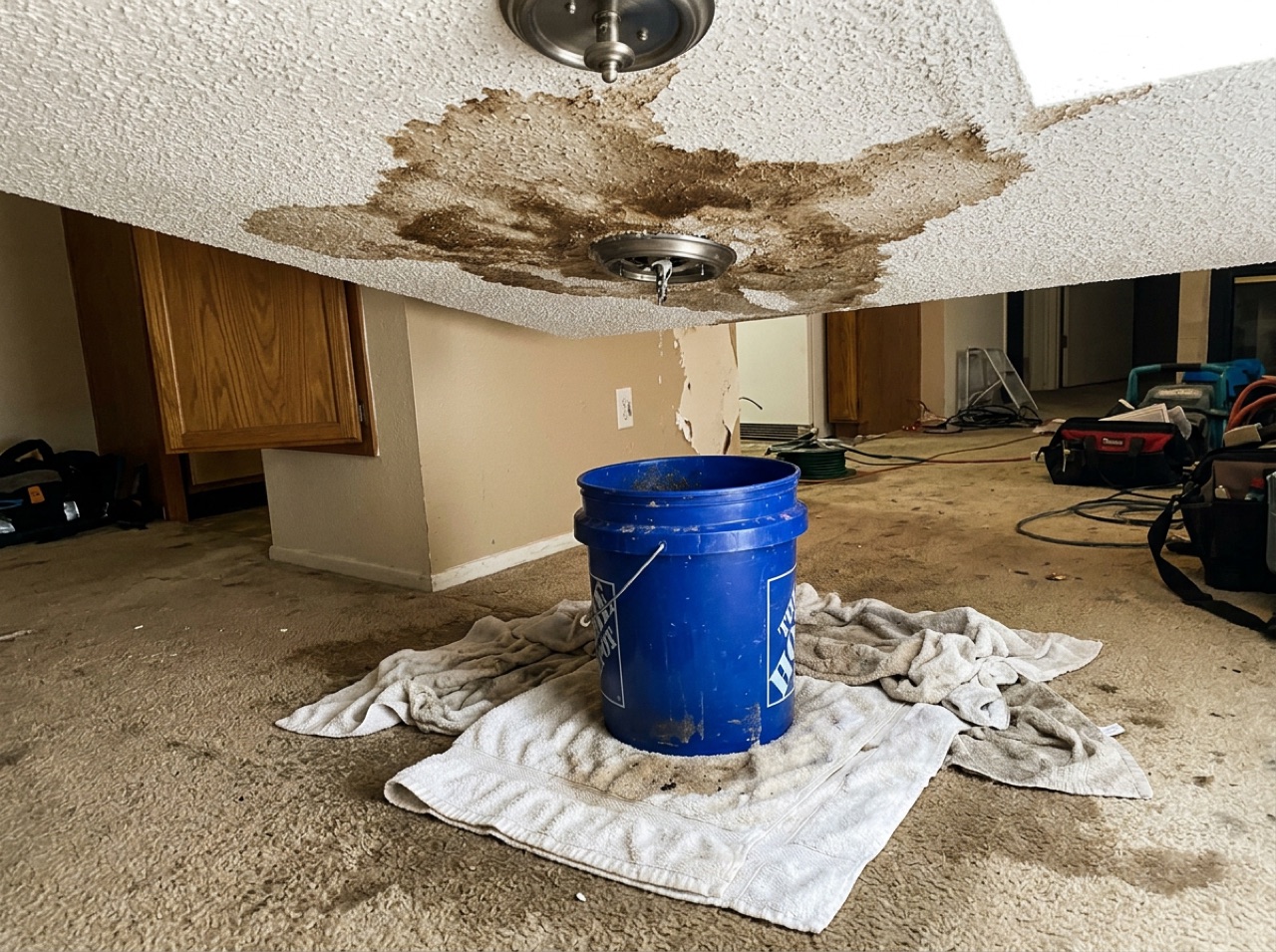
If the source is plumbing or an upstairs fixture, close the main valve. If it is the AC, turn the system off at the thermostat. Shut off power to the room at the breaker if water is near a light fixture or ceiling fan. Move furniture and electronics out, and put a bucket under active drips.
- Shut off water at the main or the fixture
- Turn off the AC if the leak is near the air handler
- Cut power to light fixtures or fans near the water
- Move furniture, rugs and electronics out of the room
- Catch drips with buckets and towels
- Take photos of the ceiling and anything damaged below
How does JGW Group repair a water-damaged ceiling?
The team confirms the source is stopped, measures moisture, removes what cannot be dried and dries the cavity before rebuilding. Patching over wet material only brings the stain back.
Moisture readings show how far water spread across the ceiling and down the walls. Soaked insulation and drywall are removed, which also lets air reach the framing above. Air movers and dehumidifiers dry the cavity while readings are tracked. Once dry, new drywall goes up and is textured and painted to blend with the rest of the ceiling.
- Confirm the leak is stopped and the area is safe
- Moisture readings across the ceiling and walls
- Removal of soaked drywall and insulation
- Drying of framing and the ceiling cavity
- New drywall, texture and paint
Water or smoke damage right now? A crew answers 24/7.
Call 725-525-3122What causes ceiling water damage in Las Vegas?
Air conditioning, plumbing above the ceiling and summer storms cause most ceiling damage in the valley. Each one leaves a slightly different pattern.
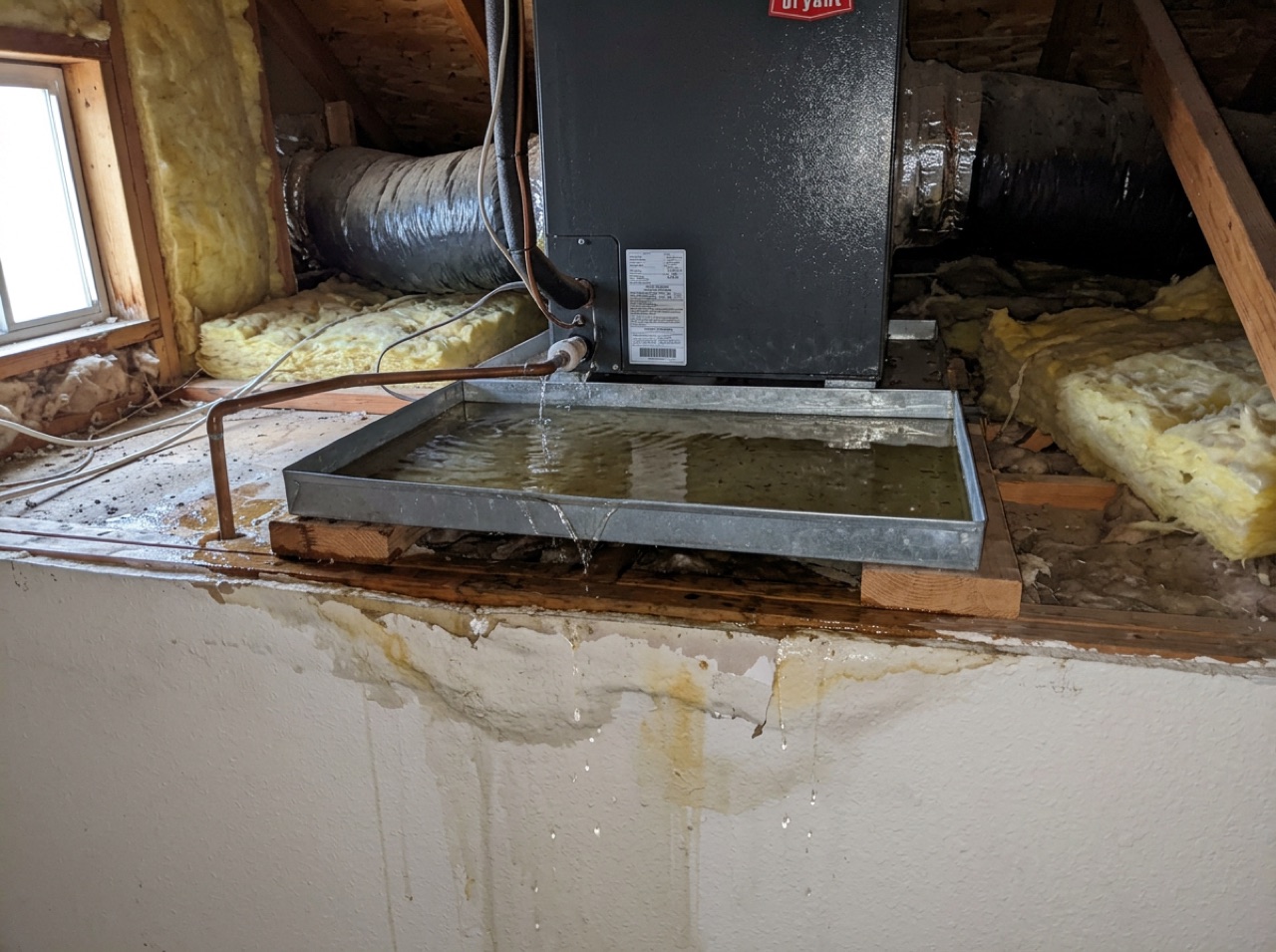
Many homes have the air handler in the attic, and a clogged condensate line can overflow the drain pan during the long cooling season. In two-story homes, a toilet, tub or supply line upstairs can soak the ceiling below, and our page on burst pipe water damage covers those leaks. The National Weather Service's Climate of Las Vegas page describes how monsoon moisture, typically in July and August, brings thunderstorms with heavy rain. Cracked tiles, worn underlayment and flashing gaps on tile roofs can let that rain in.
- AC condensate pan overflow from an attic air handler
- Upstairs toilet, tub, shower or supply line leaks
- Roof leaks through cracked tile or aged underlayment
- Leaks around roof vents, skylights and flashing
- Water heater or plumbing lines run through the attic
Why choose JGW Group for ceiling water damage repair?
A ceiling repair is only finished when the cavity above it is dry and the patch disappears into the rest of the ceiling. JGW Group handles the drying and the rebuild, so the same team owns both.
JGW Group does water damage restoration from mitigation through full reconstruction, monitors moisture during drying and documents the work for your claim. A licensed roofer or plumber fixes the source. Your insurer decides coverage. For storm season, see our monsoon flood prep guide for Las Vegas.
Where does JGW Group repair water-damaged ceilings?
JGW Group works from 6823 W Post Rd #137 in southwest Las Vegas and serves homes and businesses across the valley.
Service areas include Las Vegas, Henderson, North Las Vegas, Summerlin, Spring Valley, Enterprise, Paradise and Boulder City. Calls are answered 24/7.
“provided a prompt and professional service in removing mould from a ceiling in my home.”
Amaris Lyric, Google reviewFrequently asked questions
Can I just paint over a water stain on my ceiling?
Only after you know the leak is fixed and the drywall is dry. Painting over a wet ceiling traps moisture, and the stain usually bleeds back through. If the drywall is soft, cracked or sagging, it needs replacing, not paint. A moisture reading takes the guessing out of it. JGW Group can check the ceiling during a free estimate.
Is a sagging ceiling dangerous?
Yes. Wet drywall is heavy and can drop suddenly, bringing water and debris with it. Keep everyone out of the room, shut off water to the source and turn off power to any light fixture or fan near the wet area. Do not push on the sag or poke it to drain it yourself. Call 725-525-3122 so the area can be handled safely.
Why is water coming through my ceiling when it has not rained?
In Las Vegas, the most likely causes on a dry day are an AC condensate overflow from an attic air handler, or a plumbing leak from an upstairs bathroom or a line running through the attic. Turn off the AC and close the main water valve to see if the drip slows. A plumber or HVAC tech can fix the source while JGW Group handles the damage.
Can mold grow in a water-damaged ceiling?
Yes. Insulation and the paper face of drywall hold water, and the space above a ceiling gets little air. The EPA says wet materials should be dried within 24 to 48 hours to prevent mold growth. Dark spotting, a musty smell or a stain that keeps returning are signs to have the ceiling checked. JGW Group also offers mold remediation.
Does insurance cover ceiling water damage?
It depends on the cause and your policy. Sudden events like a burst pipe or a storm that damages the roof are often treated differently from long-term leaks or worn roofing. Your insurer decides coverage. JGW Group documents the damage with photos and moisture readings, records the drying and guides you through the claim process.
Stay out from under a sagging or bulging ceiling; wet drywall can fall without warning.