
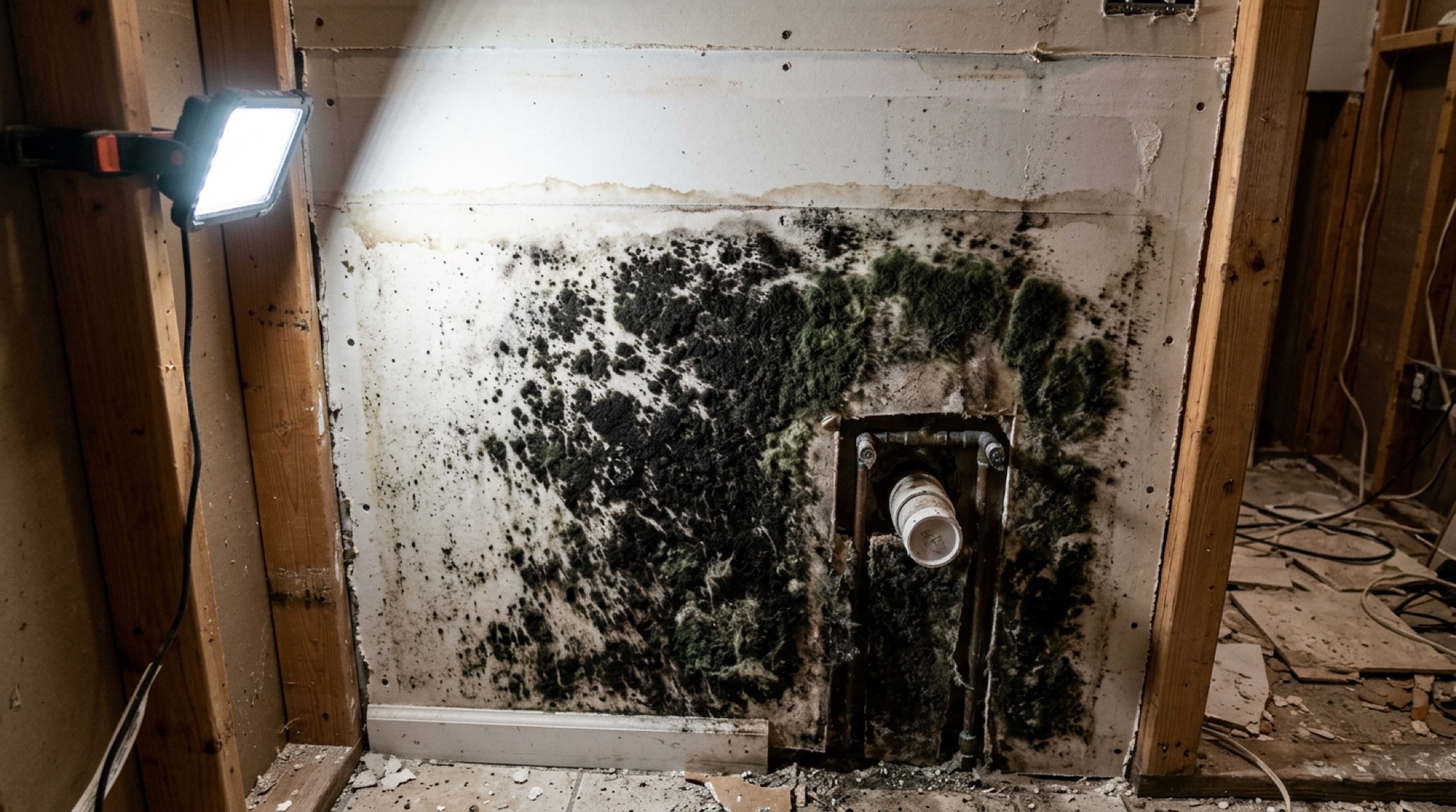
- "Black mold" is a color, not a diagnosis. Many common molds look black or dark green.
- Stachybotrys needs long-term water. It grows on materials like drywall paper and wood that stay wet for days or weeks.
- Type matters less than removal. The CDC says you do not need to know the type of mold to remove it.
- The leak is the real problem. Removing mold without fixing the moisture means it grows back.
- Free estimate, answered 24/7, for homes and businesses.
What is black mold, really?
"Black mold" is a common name for any mold that looks dark, though it is most often used for Stachybotrys chartarum. That species is greenish-black and tends to grow on materials high in cellulose, like the paper facing on drywall, ceiling tiles and wood, when they stay wet for a long time.
Plenty of other molds also look black, including Cladosporium, Alternaria and some Aspergillus species. You cannot tell which one you have by looking, and according to the CDC, you do not need to. All indoor mold growth should be removed and the moisture source fixed.
| What you see | What it might be | What it tells you |
|---|---|---|
| Slimy, greenish-black patches on drywall | Often Stachybotrys | Materials have likely been wet for a long time |
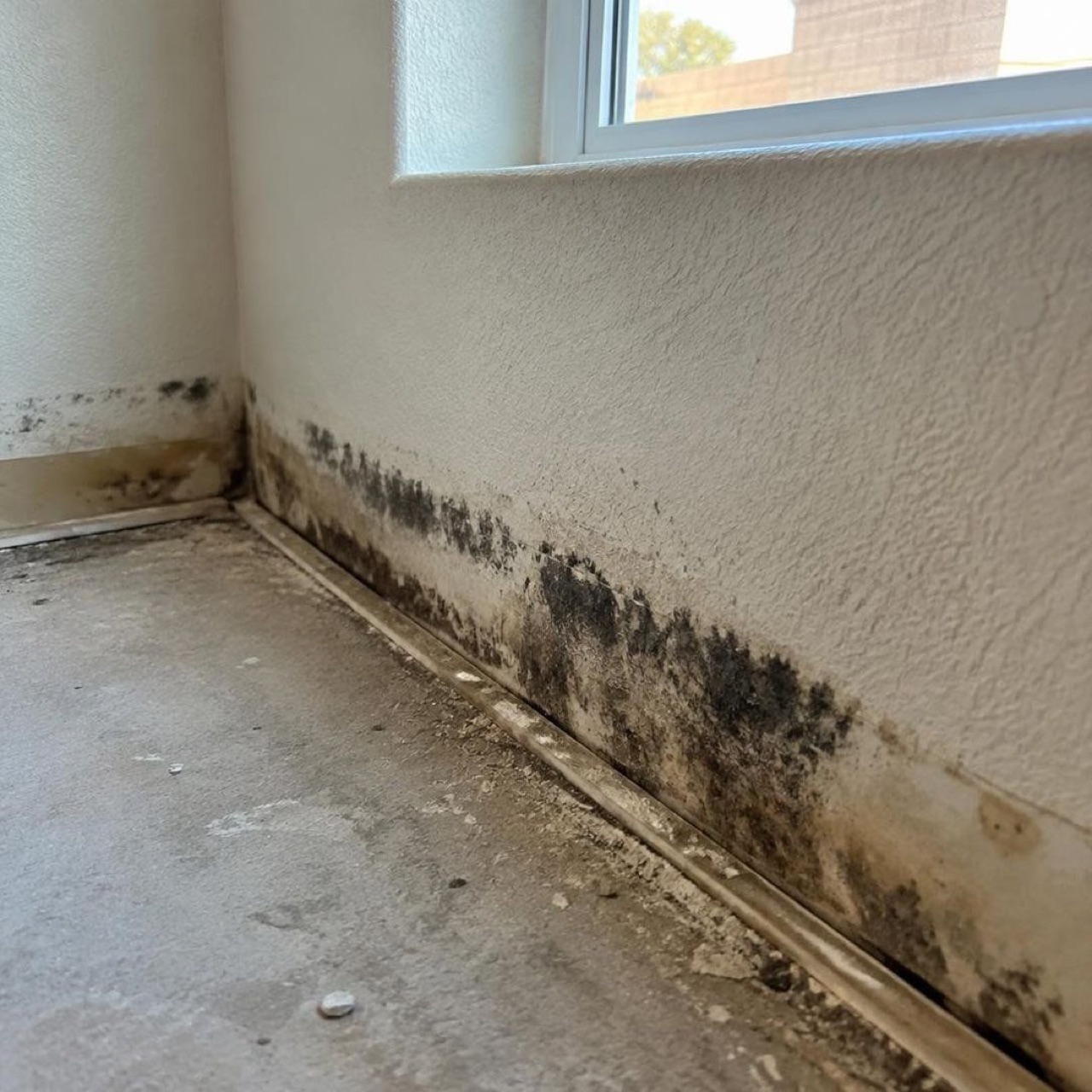
| Small black dots on bathroom grout or caulk | Often a surface mold or mildew | Usually a ventilation and cleaning issue |
| Dark fuzz on the back of cabinets or baseboards | Any of several molds | Look for a leak behind or below |
| Dark staining on ceilings below the AC unit | Mold, water stains, or both | Check the condensate line and drain pan |
Is black mold dangerous?
Any indoor mold, dark or not, can affect health, and the CDC's advice is the same for all of it: if you see or smell mold, remove it. According to the CDC's mold guidance, some people exposed to mold get a stuffy nose, sore throat, coughing, wheezing, burning eyes or a skin rash. People with asthma or mold allergies may have severe reactions, and people with weakened immune systems or chronic lung disease can get lung infections from mold.
Some molds, including Stachybotrys, can produce compounds called mycotoxins, and searches for "toxic black mold" often turn up stronger claims than health agencies make. The CDC notes that mold affects different people differently. If you have symptoms you are worried about, talk to your doctor, and remove the mold either way.
Do you need black mold testing?
If you can see the mold, you usually do not need a test to start removal. The CDC does not recommend mold testing, noting that there are no set standards for an acceptable amount of mold in a home and that, no matter the type, it needs to be removed.
Testing can still be useful in some cases. An independent inspector can take air or surface samples and send them to a lab.
- You smell mold but cannot find where it is growing
- You need clearance results after remediation, for a landlord, buyer or your own records
- A real estate sale or lease requires documentation
- A doctor asks what is in the home
Water or smoke damage right now? A crew answers 24/7.
Call 725-525-3122What should you do before we arrive?
Leave the mold in place, stop the water and keep air from spreading spores. Scrubbing or spraying a large patch of dark mold yourself can send spores through the house.
- Shut off the water if a leak is still running.
- Do not scrape, sand or power-wash the mold.
- Turn off the AC if the growth is near the air handler, returns or vents.
- Close the door to the room if you can.
- Keep anyone with asthma or a weakened immune system out of the area.
How does JGW Group remove black mold?
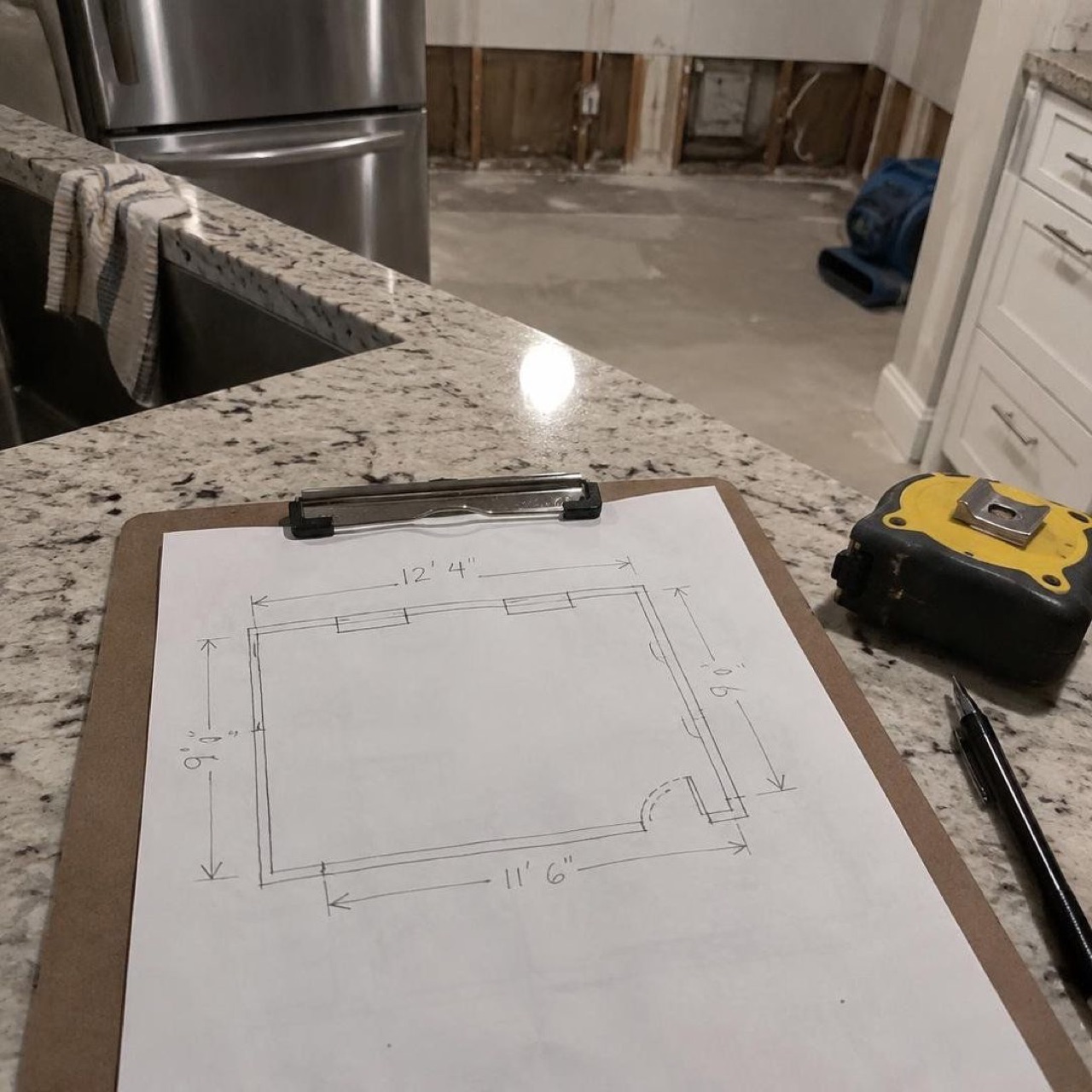
We handle black mold the same careful way as any mold remediation job: find the moisture, contain, remove, clean and dry. Dark, long-term growth often means more material has to come out, because it has usually had time to spread into wall cavities.
- Find the water. Moisture readings show how far the leak spread, often well past the visible mold.
- Contain the area. Plastic barriers keep spores from moving to clean rooms.
- Remove affected materials. Moldy drywall, insulation, carpet pad and trim are bagged and removed.
- Clean and HEPA vacuum. Framing and hard surfaces are cleaned.
- Dry the structure. Air movers and dehumidifiers run while we monitor moisture.
- Rebuild. Walls, floors and trim are put back once everything is dry.
What causes black mold in Las Vegas homes?
Dark, long-term mold growth in Las Vegas almost always traces back to a slow leak that went unnoticed. Common sources are AC condensate lines in the attic, slab leaks under concrete floors, water heater and washer leaks, and roof leaks after monsoon storms.
Homes closed up for the summer are a frequent case, because a small leak can soak drywall for weeks before anyone is home. Larger jobs are part of full mold remediation, and if the leak also left standing water, our water damage restoration team dries the structure. Our post on how fast mold grows after water damage explains why speed matters.
Areas we serve
JGW Group is based at 6823 W Post Rd #137 in Southwest Las Vegas and removes black mold from homes and businesses in Las Vegas, Henderson, North Las Vegas, Summerlin, Spring Valley, Enterprise, Paradise and Boulder City.
“provided a prompt and professional service in removing mould from a ceiling in my home.”
Amaris Lyric, Google reviewFrequently asked questions
How do I know if it is black mold or just dirt?
Mold often looks fuzzy or slimy, grows in spots or patches, comes back after cleaning, and smells musty. Dirt and soot wipe off and do not spread. Location is a big clue: dark growth near a sink, water heater, AC unit or the base of a wall usually means moisture. If you are unsure, a free estimate can tell you whether the area is wet.
Can I clean black mold with bleach?
On small areas of hard, non-porous surfaces like tile or glass, a bleach solution or household cleaner can remove mold, according to the CDC. Never mix bleach with ammonia. On drywall, wood or insulation, mold grows below the surface, so cleaning the stain does not remove it. Large patches or growth inside walls should be handled with containment.
Should I move out if I find black mold?
Most people do not need to leave for a small, contained area. For larger growth, or if someone in the home has asthma, allergies or a weakened immune system, it may make sense to stay away from the affected rooms or elsewhere during removal. If you have health concerns, ask your doctor. We can explain the scope during the free estimate.
Does homeowners insurance cover black mold removal?
It depends on your policy and the cause. Mold from a sudden, covered water event may be treated differently from mold caused by a long-term leak or poor maintenance, and many policies cap mold coverage. Your insurer makes the decision. JGW Group documents the damage, moisture readings and drying to support your claim.
Why did black mold grow in my house when Las Vegas is so dry?
Outdoor humidity has little to do with it. Stachybotrys and other dark molds grow where materials stay wet, such as drywall behind a slow plumbing leak, ceilings below a dripping AC line, or flooring above a slab leak. Las Vegas homes are full of water lines, and when one leaks inside a wall, the dry air outside does not reach it.
Do not scrape or sand dark mold growth, and keep people with asthma or weakened immune systems away from the area.