
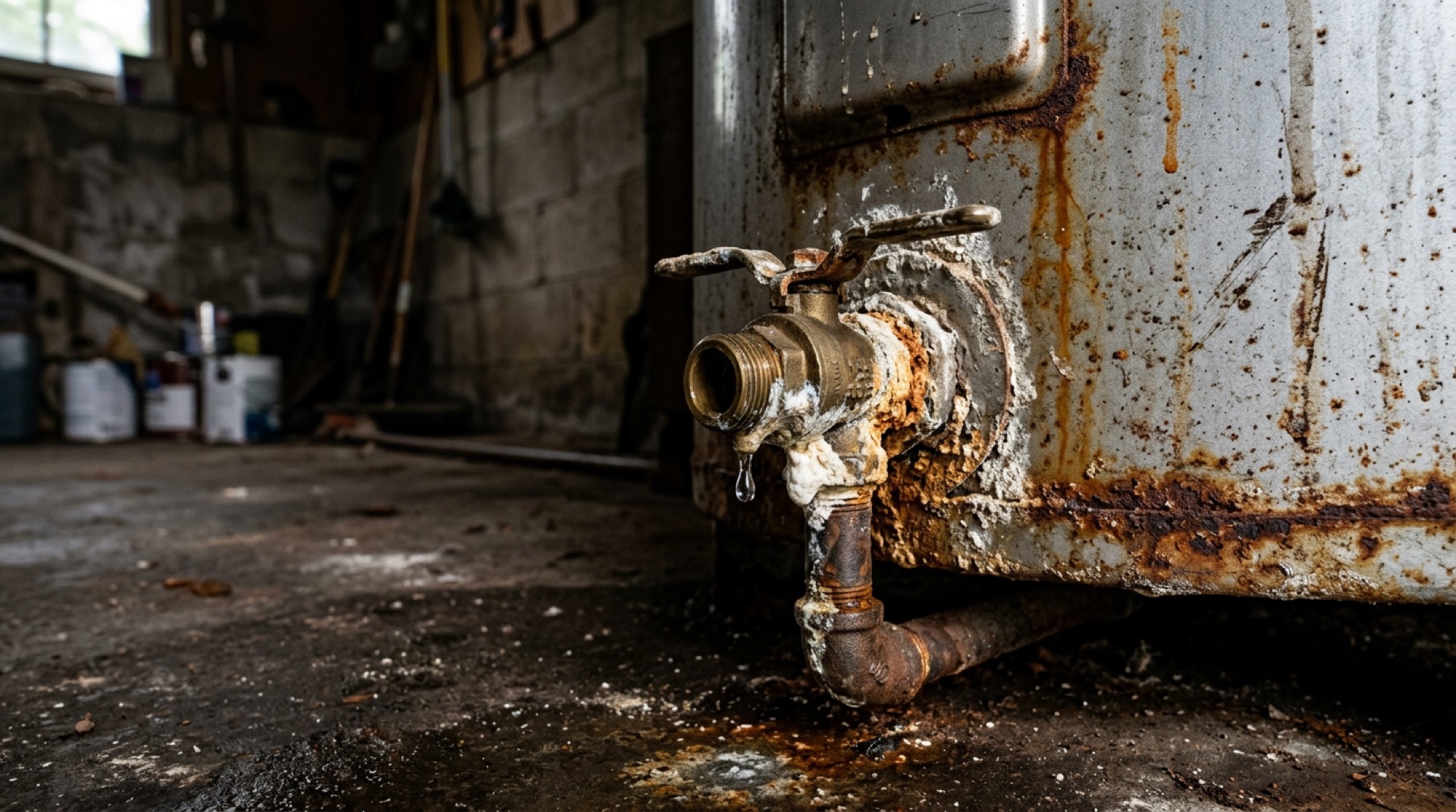
What are the warning signs of a leaking water heater?
The clearest warning signs are water or rust at the base of the tank, a damp floor or wall in the heater closet, popping noises, and rusty or cloudy hot water. Any of these means it is time to have the heater checked before it fails.
Most water heater floods do not start with a burst. They start with a slow drip that soaks the closet floor, the drywall behind the tank and the carpet in the next room. Catching that drip early saves the floor, the walls and the cleanup.
| Warning sign | What it often means | How urgent |
|---|---|---|
| Puddle or damp floor around the base | Tank, fitting or drain valve leaking | Act now |
| Rust or corrosion on the tank bottom or fittings | Steel tank or connections corroding | Have it inspected soon |
| Water dripping from the relief valve pipe | Pressure or temperature too high, or a worn valve | Call a plumber |
| Popping, rumbling or crackling sounds | Mineral sediment built up on the tank bottom | Plan for flushing or replacement |
| Rusty or cloudy hot water | Corrosion inside the tank or scale buildup | Have it inspected soon |
| Hot water runs out faster than it used to | Sediment taking up space in the tank | Plan service |
| Swollen baseboard or stained drywall near the closet | Slow leak that has been going for a while | Act now |
Why are water heaters harder on Las Vegas homes?
Las Vegas tap water is very hard, which means it carries a lot of dissolved minerals. Most of the valley's water comes from Lake Mead, and the Las Vegas Valley Water District reports water hardness of about 16 to 17 grains per gallon, which it classifies as very hard.
When hard water is heated, minerals settle out as scale and sediment in the bottom of the tank. That layer makes the burner or elements work harder, causes the popping sounds many homeowners hear, and can speed up wear on the tank and fittings.
Hard water is safe to drink, but it is tough on anything that heats water. Water heaters, dishwashers and ice makers all show its effects over time.
Where do water heater leaks usually start?
Leaks usually start at the connections and valves before the tank itself fails. Knowing where to look makes a quick monthly check easy.
Check these spots with a flashlight:
- The cold inlet and hot outlet connections on top of the tank.
- The temperature and pressure relief valve and the discharge pipe that runs from it.
- The drain valve near the bottom of the tank.
- The bottom edge of the tank and the drain pan, if you have one.
- The flex lines and shutoff valve on the supply line.
- The floor, baseboards and drywall around the closet or garage location.
Dealing with this right now? Get a free estimate.
Call 725-525-3122What should you do if your water heater is leaking?
Shut off the water to the heater, turn off its power or gas, and start removing water. Then call a plumber about the heater and a restoration company about the water that got out.
Step by step:
- Close the cold water shutoff valve on the supply line above the heater.
- For an electric heater, switch off its breaker. For gas, turn the gas control to off or pilot.
- Let the water cool before touching fittings or the drain valve, since tank water can scald.
- Move boxes, rugs and stored items out of the wet area.
- Take photos of the heater, the leak and the wet floor for your insurer.
- Call a licensed plumber to repair or replace the heater.
- Call a restoration company to extract water and dry the closet, walls and flooring.
How much damage can a water heater leak cause?
A slow leak can soak the floor and walls for weeks, and a ruptured tank can release its full volume plus a constant flow from the supply line until someone shuts it off. Where the heater sits decides what gets wet.
In a garage, water often runs under the wall into the laundry room or hallway. In an interior closet, it soaks carpet pad, the bottom of drywall and the concrete slab in nearby rooms. Attic installs, found in some homes, can bring water down through a ceiling.
Water heater leaks are clean water at the start, but water that sits on carpet and drywall for days can degrade and grow mold. That is why the first day matters.
Commercial buildings face the same risk on a larger scale. A leaking heater in a restaurant, salon or office restroom can soak flooring and walls overnight before staff arrive, so leak alarms and a posted shutoff location are worth the small effort.
How is water heater damage cleaned up?
Cleanup follows the same process as other clean-water leaks: extract, map moisture, dry with equipment, and confirm with readings. Baseboards and drywall that stay wet at the bottom are often cut back a few inches so the wall cavity can dry.
JGW Group's appliance leak cleanup service covers water heaters, washing machines, dishwashers, refrigerators and other household appliances. If the water spread into several rooms or into the slab, it becomes a full water damage restoration job with drying, documentation and repairs.
Wondering how long your closet and floor will take to dry? See how long water damage takes to dry.
How can you lower the risk of a water heater leak?
Regular checks and basic maintenance catch most problems early. None of these steps takes long, and they matter more in a hard-water area.
Simple habits that help:
- Look at the base of the heater and the floor around it once a month.
- Ask a plumber about flushing sediment from the tank on a regular schedule.
- Have the anode rod checked, since it is designed to corrode instead of the tank.
- Install a drain pan and a water leak alarm under the heater.
- Check the age on the label or serial number and plan replacement before failure.
- Ask a plumber whether a water softener or scale treatment makes sense for your home.
Frequently asked questions
Is a small puddle under my water heater an emergency?
It is a warning that needs attention soon. First check whether the water is coming from the tank, a fitting, the drain valve or the relief valve pipe. A small drip at a fitting may be a simple repair, but water from the tank itself usually means the heater is failing. Shut off the supply and call a plumber if it keeps coming back.
Does homeowners insurance cover a leaking water heater?
Many policies cover sudden water damage caused by a water heater that ruptures, but not the cost of the heater itself. Damage from a slow leak that went on for weeks may be excluded as gradual or maintenance related. Your insurer decides coverage. Photos and drying records from JGW Group help your adjuster see what happened.
Does hard water really shorten water heater life in Las Vegas?
Hard water leaves scale and sediment in the tank, which makes the heater work harder and adds stress to the tank and fittings. The Las Vegas Valley Water District classifies local water as very hard. Regular flushing and checking the anode rod help, and some homeowners add a softener. A plumber can advise on your specific heater.
Can JGW Group dry my water heater closet and floor?
Yes. JGW Group extracts water, checks moisture in the floor, baseboards and drywall around the heater, and sets up air movers and dehumidifiers until readings show everything is dry. We also document the damage for insurance and can rebuild drywall and flooring afterward. A licensed plumber handles the heater repair or replacement.